đź”± Bloodline Economics: The Science of Building a Modern Family Dynasty
How modern couples can reclaim the lost art of family structure, wealth continuity, and generational power in the age of distraction.
Written by: Jamal “Sultan” Leigh
I. The Modern Male Architect
The average man today is more connected than any generation before him and yet more disoriented than ever. He scrolls endlessly, consumes advice from strangers, and quietly carries the weight of a family system that no longer remembers what order looks like.
For thousands of years, leadership at the household level defined civilizations. The patriarch was not merely a provider; he was the engineer of continuity. He set standards, wrote codes, and established rituals that made belonging tangible.
Moorish Families of Spain
From the Moorish courts of Spain to the merchant clans of Asia, men who understood structure ensured that their bloodlines survived regime changes, economic collapses, and moral revolutions.
Today, that system has inverted. Authority is treated as oppression, discipline as toxicity, and tradition as an inconvenience. Families are no longer guided by principle but by mood.
Children are raised by algorithms, relationships are negotiated like business contracts, and masculinity is reduced to performance art. Yet even within this confusion, one fact remains constant: societies collapse when families do.
To rebuild power, men must return to their original post: as architects of order. The modern patriarch is not a dictator but a designer. His duty is to build frameworks that outlast his own emotions and protect his household from the entropy of modern life.
He must combine the calm authority of a CEO with the empathy of a statesman. He must see his home not as a collection of individuals, but as a small nation with values, laws, and rituals that define its culture.
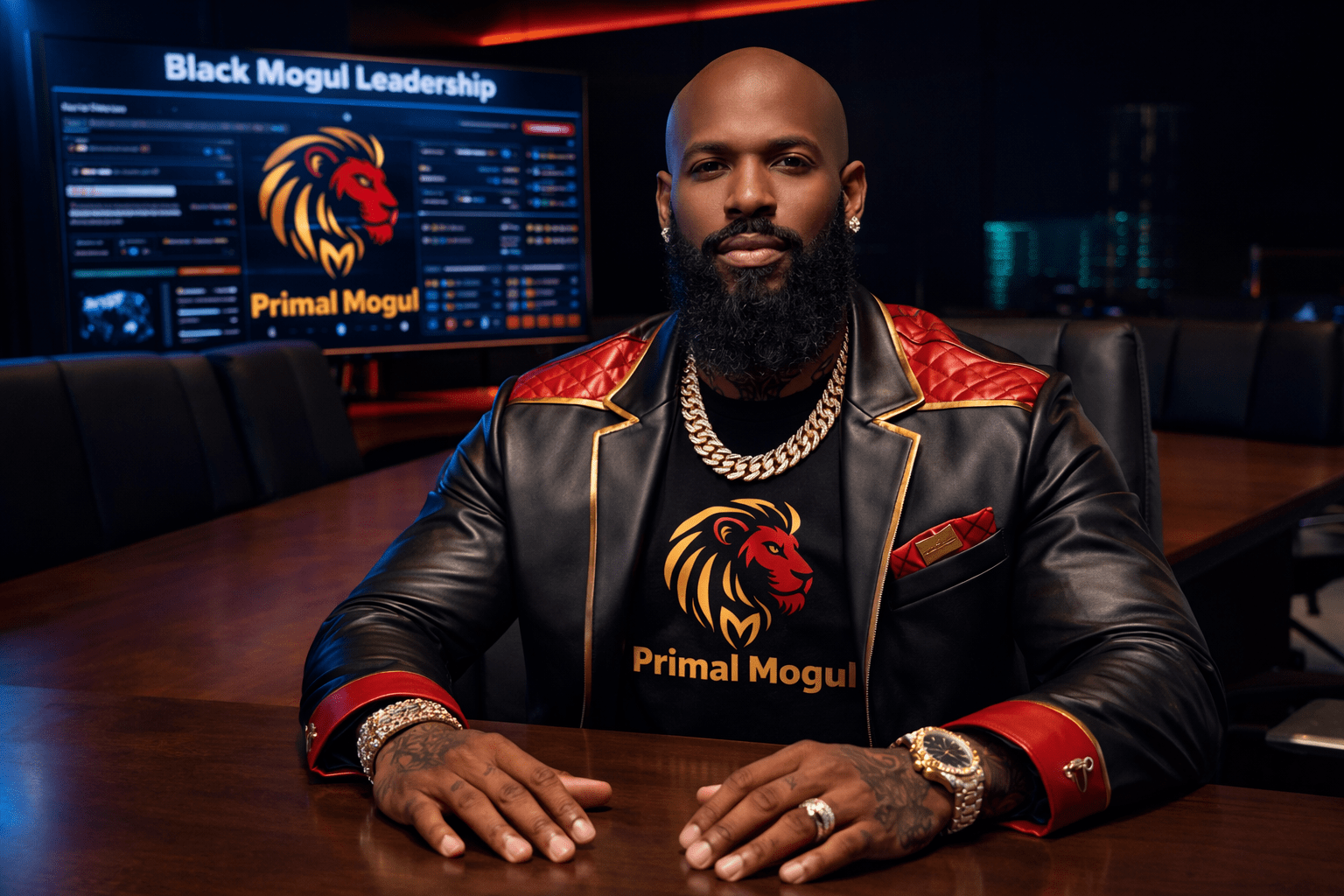
The chair he occupies is sacred, not because it commands obedience, but because it carries the responsibility of creation.
Key Insight:
Family stability is not an emotional achievement: it is a structural one. The man who masters order builds an inheritance that no storm can erase.
II. The Foundation: Rebuilding the Modern Family
To understand the crisis, you must first study the architecture of its collapse. The nuclear family: once the most resilient unit of social order has been strategically dismantled over the past fifty years.
Economic policies rewarded separation, cultural narratives mocked tradition, and technology replaced community with distraction.
Marriage, once a covenant of discipline and shared purpose, has become a transaction between two brands seeking comfort. Parenthood, once apprenticeship and mentorship, has been outsourced to institutions.
The idea of a family mission: something larger than individual gratification has vanished.
The results are measurable:
- Marriage rates have fallen to record lows.
- Divorce and absentee fatherhood are normalized.
- Generational wealth gaps widen as structure collapses.
In the chaos, many seek external reform: protests, policies, politics while ignoring the true battlefield: the home. You cannot repair a nation that is spiritually homeless. You cannot build power when your family operates like a group chat instead of a government.
Rebuilding requires hierarchy: not the hierarchy of domination, but of responsibility. The father becomes the strategic architect and visionary.
The mother becomes the operational executive. The elders serve as an internal senate. The children are apprentices in discipline and purpose. Each person carries rank and duty.
Love fuels this system, but law protects it. Just as every nation must have a constitution, every household must have a written framework: a family mission, a code of ethics, and defined leadership processes. Without this, every argument resets the culture to zero.
Key Insight:
You cannot fix society until you repair the smallest government: the household. Every great civilization began as a family that enforced its own laws.
III. The Chairman’s Throne: Modern Leadership at Home
Leadership in a modern home requires the calm precision of a boardroom combined with the warmth of community.
The Chairman’s role is not to dominate; it is to organize. His task is to convert emotion into process and chaos into rhythm.
He governs through structure:
Vision: A written 10-, 20-, and 50-year direction for the family.
Meetings: Weekly reviews of finance, goals, and household culture.
Conflict Management: Pre-agreed methods for resolving tension before it fractures respect.
Ritual: Scheduled moments of bonding: dinners, travel, celebrations that renew the emotional contract.
The wife or partner operates as the household COO: the stabilizer, executor, and cultural anchor. Together, they form a dual-leadership model. The Chairman charts the map; the COO ensures the ship stays on course. This shared authority turns marriage into enterprise.
True power is quiet. The strongest men enforce order without shouting. Strong men teach discipline through example. They show restraint when emotion invites chaos. They build predictability because in predictable environments, trust multiplies.
Key Insight:
The home either has order or emotion as its government. Leadership without structure turns love into volatility.

IV. The Bloodline Economy: Wealth as Governance
Money, in isolation, is powerless. Wealth without governance is noise. The great families of history: from the Rothschilds to the Fords understood that finance was not simply arithmetic but architecture.
A family that endures economically treats money as a system, not an event. Its members follow laws that define how capital flows, how risk is managed, and how growth is distributed.
The Five Laws of Family Capital:
1. Earn together: Every member contributes to productivity, even symbolically.
2. Save intentionally: The goal is liquidity for opportunity, not hoarding for ego.
3. Invest collectively: Funds are deployed through family councils, not impulses.
4. Protect legally: Trusts, corporations, and insurance become armor against chaos.
5. Scale generationally: Children are trained early to manage and multiply assets.
This transforms money from a personal obsession into a communal duty. Families that master this law become self-funded ecosystems. Well organized families lend to one another. They build internal credit unions.
Modern families dynasties operate private funds. They teach responsibility by making wealth governance part of family law.
Every family dynasty requires boundaries. Love may guide the heart, but contracts protect the mission. Prenuptial agreements, succession documents, and trust structures prevent emotion from dismantling empire.
Key Insight:
Wealth is not measured by accumulation but by control. The family that governs its capital governs its destiny.
V. Culture, Health, and Protection: Guarding the Dynasty
A dynasty dies when its culture becomes entertainment. When a family loses its rituals, it loses its identity.
Cultural preservation is an act of war in an age of distraction. Modern society sells confusion as freedom. It rewards rebellion over responsibility and mocks discipline as oppression. The antidote is ritual: repetition that preserves identity.
Every family needs cultural armor:
- Ritualized Dinners: A consistent time each week when hierarchy, gratitude, and discussion are enforced.
- Media Audits: Intentional control of what enters the home—music, television, digital content.
- Cultural Education: Storytelling that links children to ancestry, history, and purpose.
- Rites of Passage: Structured milestones that transition children into adulthood with dignity.
Yet culture alone is not enough. Physical and mental health must be treated as infrastructure. Weak bodies produce weak minds. Illness drains focus, and fatigue fuels conflict.
Families that think generationally invest in their wellness:
- Collective meal planning rooted in discipline, not indulgence.
- Family fitness and shared movement routines.
- Supplementation and preventive healthcare.
- Annual wellness budgets to protect the engine of productivity.
- Health and culture form a loop: structure sustains wellness, and wellness sustains structure.
Key Insight:
What enters your home shapes your lineage. Culture survives not through belief, but through daily enforcement.
VI. The Dynasty Blueprint
Building a dynasty is less about time and more about transfer. The goal is not to be wealthy today: it is to create systems that function without you.
Dynasty architects think in centuries. They design their family like a corporation that outlives its founder. The process begins with the Seven-Generation Plan: a written vision describing what the family should look like 100 years from now: its industries, land holdings, philanthropic aims, and cultural values.
They preserve intelligence. Documents, recordings, business plans, and family histories are archived digitally and physically. Every lesson becomes legacy material.
They train heirs not through indulgence, but through exposure. Children are introduced to business early, mentored by elders, and assigned responsibilities proportionate to maturity. Power is earned, not inherited blindly.
A dynasty’s soul rests in its code: a moral constitution that governs behavior long after wealth is established. That code must emphasize honor, discretion, unity, and execution.
Key Insight:
A modern family dynasty is not a fantasy of luxury. It is a disciplined civilization operating inside a last name. When structure becomes sacred, time becomes your ally.
Frequently Asked Questions: Building a Modern Dynasty in 2026
1. What does Bloodline Economics actually mean?
It means treating your family like an organized financial institution with systems, strategy, and structure: rather than relying on toxic emotions and luck.
2. Is this philosophy only for wealthy families?
No. It scales from working-class households to billion-dollar estates. The structure is the same; only the resources change.
3. How can single parents apply this?
By documenting rules, building consistency, and creating mentorship networks. Structure does not require marriage: it requires clarity.
4. What role do women play in Bloodline Economics?
They are the operational and cultural backbone. They stabilize the marriage systems, enforce standards, and protect emotional continuity of love, unity and respect.
5. How do you start building family structure from scratch?
Begin with a written vision. Create a one-page family constitution that defines values, rules, and goals.
6. What’s the biggest mistake modern families make?
Confusing love with order. Love without rules collapses; order without love becomes tyranny. The balance is discipline guided by care.
7. How does technology fit into dynasty building?
Used correctly, it amplifies efficiency. Use AI for documentation, automation, and education: not distraction.
8. How can families protect wealth legally?
Through trusts, LLCs, life insurance, and secret operating agreements. The goal is to separate emotion from ownership.
9. How do you teach children about money and discipline?
Through exposure and participation in the family businesses. Let them observe family meetings, understand budgets, and earn trust before inheritance.
10. What about blended or nontraditional families?
Structure works for all family types. Transparency, clear roles, and written agreements prevent resentment and confusion.
11. What happens when one family member refuses structure?
Leadership requires patience and boundaries. You cannot force compliance, but you can protect the system by enforcing standards and family bylaws.
12. What is the long-term goal of Bloodline Economics?
To create families that function as sovereign micro-nations that are self-funded, culturally unified, and immune to chaos.

The Closing Declaration
We live in an age where men are told to be harmless, women are told to be restless, and children are taught to be entertained. But the truth is simple: civilizations are not rebuilt by followers: they are rebuilt by modern family architects.
Bloodline Economics is not theory. It is the return of design. It is the awakening of disciplined families who refuse to let toxic culture dictate their destiny.
Every reader has a choice: to continue living as an individual in a distracted society, or to become the founder of a modern family dynasty that restores order to their bloodline.
Key Insight:
True Power begins at home. The next future empire is a family that learned to govern itself.
đź’Ľ Join the Primal Mogul Elite
If this message resonates, it’s because you know your name was never meant to end with you.
Inside Primal Mogul Elite, you gain access to:
- Private dynasty planning frameworks and AI-powered wealth systems.
- Legal and financial templates to structure family constitutions and trusts.
- Monthly leadership sessions on heir training, digital automation, and cultural planning.
- Exclusive previews and early access to Bloodline Economics: The Science of Building a Modern Family Dynasty.
Build your family like a company. Guard your bloodline like a fortress. Become the architect your ancestors prayed for.
✨ Bloodline Economics: The Science of Building a Modern Family Dynasty
Full Book Coming Soon: Mid 2026
Printed Edition · Digital Vault Copy · Member-Only Executive Blueprint
Reserve early access inside Primal Mogul Elite.


Leave a Reply