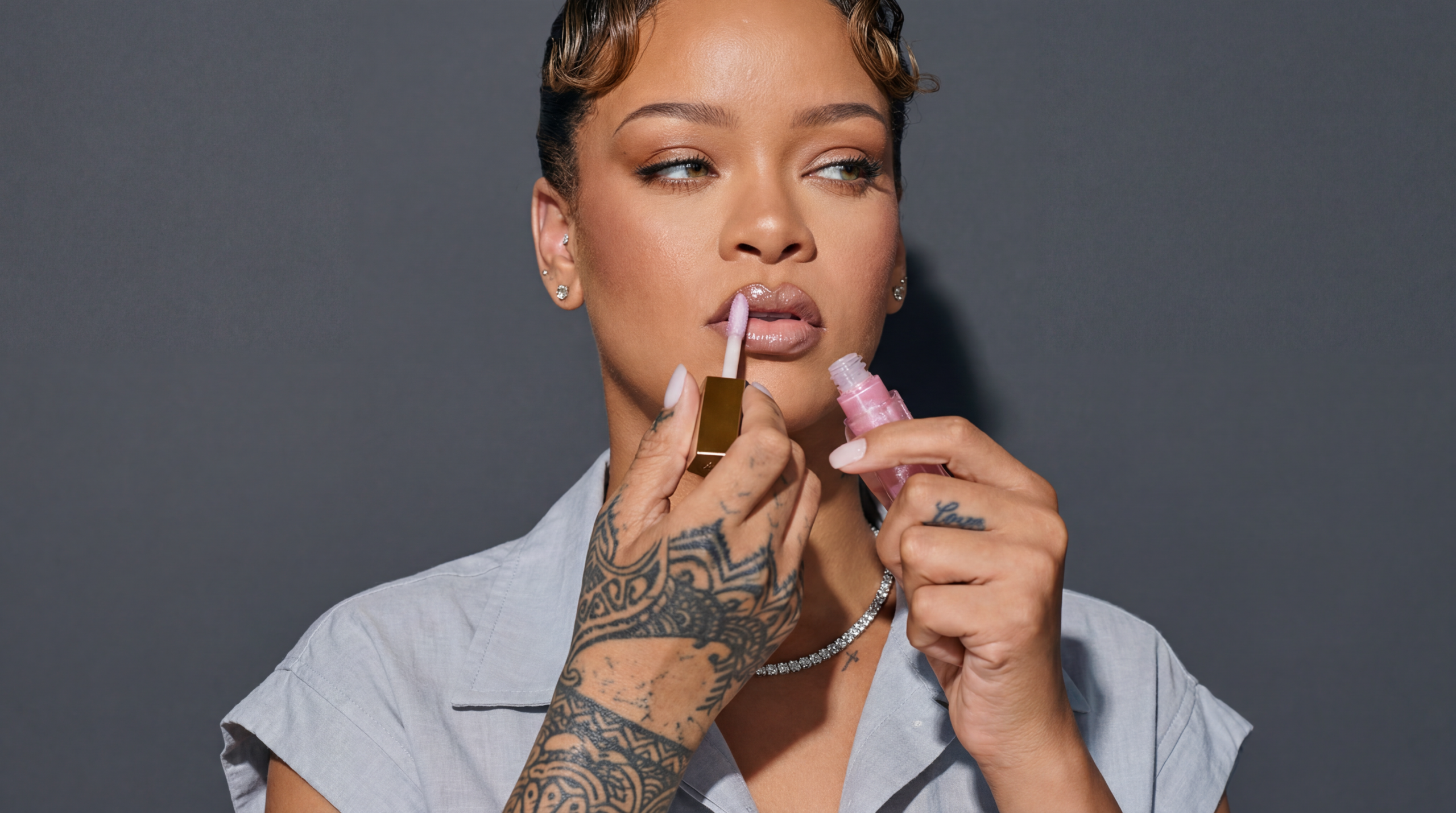

Rihanna: The Business Strategy Behind Fenty’s Billion-Dollar Brand
Grand Opening: Understanding the Big Picture
Rihanna is widely known as a global music and fashion icon, but her role at Fenty goes far beyond public image. Inside the billion dollar company, she’s not just a spokesperson or brand ambassador.
She operates as an owner and active decision-maker. This distinction matters because it explains why Fenty has grown into a durable, high-performing business rather than a short-term celebrity brand.
From the beginning, Fenty was designed as a connected business system. Product design, marketing, customer feedback, data analysis, and distribution were built to work together instead of operating in isolation.
Many brands separate these areas, which slows growth and creates mistakes. Fenty reduced friction by linking everything into one structure.
Fenty is not only a beauty and fashion brand. It is an example of how cultural influence can be converted into real economic power when leadership, ownership, and operational systems are aligned.
The brand shows what happens when creativity is supported by structure.
Executive Insight
Fenty succeeds because Rihanna operates with ownership authority and strategic input, not just public visibility.
How the Fenty System Works
Fenty Beauty launched through a partnership with LVMH’s Kendo division, a group known for building global beauty brands. This partnership was different from typical celebrity deals.
Rihanna did not license her name and step away. She secured ownership, governance input, and long-term control over brand decisions.
LVMH contributed manufacturing expertise, global supply chains, retail access, and operational scale. Rihanna contributed cultural insight, market awareness, and brand direction.
Because both sides shared long-term goals, the company focused on building value rather than chasing quick revenue.
Fenty’s system relies on tightly connected operations:
- Direct-to-consumer online sales that track purchasing behavior in real time
- Product development guided by customer demand rather than assumptions
- Inventory planning that reduces overproduction and delays
- Global launches informed by regional data and customer feedback
SavageX Fenty adds another layer through its membership model. Customers subscribe, creating predictable revenue and continuous insight into sizing, preferences, and buying habits.
This model allows the brand to learn directly from customer behavior instead of relying on trend forecasts.
Executive Insight
Fenty runs on feedback loops where culture, data, and ownership reinforce each other.

What Fenty Is, What It Sells, and Why It Works
Fenty is not a single product line. It is a brand ecosystem designed to serve real people at scale while maintaining premium positioning.
Under the Fenty umbrella, multiple product categories operate with the same core logic: inclusivity, quality, and direct alignment with how Rihanna actually lives and presents herself.
Fenty Beauty focuses on cosmetics built around skin tone diversity and everyday usability. Its core products include:
- Foundations and concealers offered in an industry-leading range of shades
- High-performance primers, powders, and setting products
- Lip products designed for different undertones and textures
- Skincare items developed to support makeup performance, not replace it
Fenty Skin extends the system into daily skincare. The line emphasizes simple routines rather than complex regimens:
- Cleansers designed for multiple skin types
- Toners and serums focused on hydration and balance
- Moisturizers and SPF products built for daily, repeat use
SavageX Fenty operates as a fashion and lifestyle brand with a membership-driven model. Its offerings include:
- Lingerie and sleepwear across a wide range of body types
- Activewear and casual pieces designed for comfort and confidence
- Limited collections that rotate based on demand and data
What connects these products is alignment. Rihanna does not market an abstract idea of beauty. She markets a lived standard.
Her personal image is consistent with the products being sold: confident, flexible, expressive, and grounded in real use rather than fantasy aesthetics.
This alignment creates trust. Customers do not feel sold to. They feel represented. From a business perspective, this matters because brand trust reduces friction:
- Customers are more willing to try new product launches
- Repeat purchases increase without excessive ad spend
- Feedback arrives faster and with higher quality
Executive Insight
Products scale faster when the founder’s identity genuinely matches the customer experience.
Why Fenty Changed the Industry
Before Fenty entered the market, many beauty and fashion companies relied on narrow customer profiles and slow development cycles. Products were often designed for limited audiences and adjusted only after problems appeared.
Fenty reversed this approach. Inclusion was not treated as a marketing slogan. It was engineered into product design, manufacturing, forecasting, and distribution.
Because the system supported it, serving a wider range of customers became both scalable and profitable.
As a result, competitors were forced to respond. Fenty demonstrated that addressing underserved customers was not only socially relevant but economically strong when supported by efficient systems.
Executive Insight
Inclusion becomes a competitive advantage only when it is built into operations, not layered on top.
Rihanna’s Leadership Role
Rihanna’s leadership at Fenty extends beyond creative direction. She participates in decisions related to brand expansion, category launches, partnerships, and long-term positioning. This involvement ensures the brand remains aligned as it grows.
There is a critical difference that many businesses overlook:
- Visibility brings attention and traffic
- Authority protects value and outcomes
By retaining decision-making power, Rihanna safeguards the brand’s direction while professional teams manage daily execution. This balance allows Fenty to scale without losing coherence.
Executive Insight
Leadership presence combined with structural authority protects brand value over time.
Applying the Fenty Model to Business
The principles behind Fenty are not limited to global fashion houses. Entrepreneurs, creators, and digital founders can apply the same logic at different scales. These ideas are especially relevant for online businesses, AI platforms, media brands, and service companies.
Key actions include:
- Owning your digital platforms instead of depending only on social media
- Collecting customer data and using it to guide decisions
- Maintaining control over pricing, branding, and distribution
- Building systems that improve as feedback increases
When founders design businesses around systems instead of attention, growth becomes more predictable and sustainable.
Executive Insight
Control over infrastructure and data creates long-term leverage.
What You Don’t See Matters Most
Public success often hides the systems that make it possible. Automation, governance structures, decision rules, and operational workflows. Determine whether a brand expands smoothly or breaks under pressure.
Primal Mogul focuses on helping builders design these invisible systems so growth does not depend on constant effort or exposure. The goal is stability first, visibility second.
Executive Insight
Strong internal structure always comes before visible success.
Executive Summary
- Rihanna operates as an owner and strategic leader at Fenty
- The brand integrates culture, data, and operations into one system
- Inclusion is embedded into manufacturing and forecasting
- Ownership and systems drive long-term value creation
Frequently Asked Questions
How is Fenty Beauty structured?
Fenty Beauty operates as a joint venture between Rihanna and LVMH’s Kendo division, with shared ownership and governance.
What role does Rihanna play inside Fenty?
She helps guide strategy, brand positioning, and long-term growth decisions.
Why did Fenty grow so quickly?
Because it used real customer data, rapid testing, and aligned incentives from the start.
How does SavageX Fenty’s membership model work?
Customers subscribe, creating predictable revenue and continuous customer insight.
Why did Fenty disrupt beauty and fashion?
It built products and systems around real demand from a broad customer base.
Does Fenty depend on constant celebrity promotion?
No. The business systems are designed to function independently of constant publicity.
Can smaller businesses use this model?
Yes. The principles apply at any scale when adapted correctly.
How does this apply to AI or digital companies?
AI businesses also require strong feedback systems, governance, and operational clarity to scale.
Power Conclusion
Fenty demonstrates how cultural influence becomes lasting business power when supported by ownership and structure. Rihanna’s role confirms that leadership authority matters more than attention alone.
Those who control their systems control their future. Those who rely on borrowed platforms remain exposed.
Join Our Membership Program
Primal Mogul is built for builders who want systems instead of noise. Membership provides access to:
- Structured frameworks for digital, media, and AI businesses
- Private AI tools designed to support scalable execution
- Ongoing strategic intelligence for real-world decision-making
Access is deliberate. Control is built through disciplined execution.