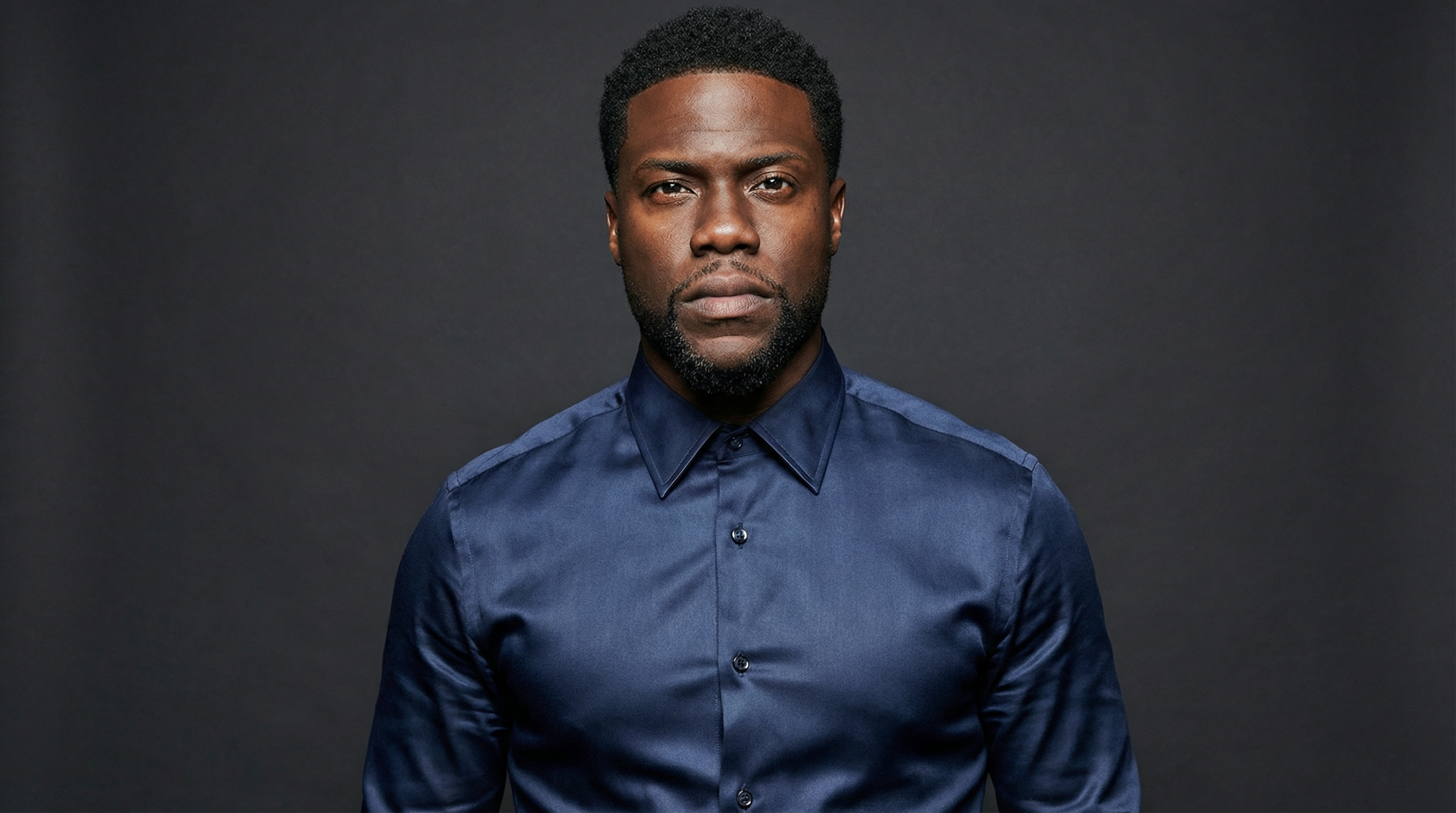

Kevin Hart × Authentic Brands Group
Power Intro: From Talent Income to Institutional Ownership
Kevin Hart’s partnership with Authentic Brands Group represents a decisive shift away from performance‑based income and toward permanent asset control. This is not a publicity‑driven announcement, a short‑term endorsement, or a conventional licensing payout.
It is a structural repositioning that moves Hart from entertainer to long‑term brand owner, aligning his personal identity with a global IP platform designed to scale value well beyond active performance years.
Most public narratives around celebrity wealth are incomplete. They focus on box office numbers, tour revenue, and endorsement checks while ignoring the more consequential layer of modern power: intellectual property ownership paired with institutional leverage.
For entrepreneurs, creators, and executives navigating volatile markets, the lesson is direct. Stability does not come from doing more work. It comes from owning systems that generate value without constant personal output.
Kevin Hart in Business Terms
Kevin Hart’s public image is rooted in comedy and film, but his economic profile has evolved steadily for more than a decade.
Beyond entertainment, he operates production entities, holds equity positions, and commands a global digital audience approaching three hundred million across platforms.
In practical terms, his name already functions as a distribution channel. The partnership with Authentic Brands Group formalizes that reality and connects it to institutional infrastructure capable of monetizing cultural relevance at global scale.
Key characteristics of Hart’s position prior to the deal include:
- Global recognition with cross‑generational appeal
- Proven monetization across entertainment and brand partnerships
- Massive direct‑to‑audience digital reach independent of studios or networks
- Cultural credibility that translates across markets and demographics
What Kevin Hart lacked was not influence or income. It was institutional scale.
Authentic Brands Group: The Infrastructure Behind the Strategy
Authentic Brands Group is not a talent agency and not a marketing firm. It is a brand ownership and licensing company built to extract long‑term value from intellectual property.
ABG operates by acquiring or partnering with IP holders and expanding those assets across global product categories through licensing and distribution partnerships. It does not manufacture goods. It controls rights, access, and brand direction.
Its portfolio generates tens of billions in annual retail sales and includes globally recognized assets such as Muhammad Ali, Elvis Presley, Shaquille O’Neal, and David Beckham.
The advantage ABG brings is not visibility. It is infrastructure: legal frameworks, global partners, category expansion, and predictable monetization at scale.
What the Agreement Actually Includes
The partnership rests on three core structural components.
Brand Rights and Licensing
Authentic Brands Group receives the rights to license Kevin Hart’s name, likeness, and associated intellectual property across multiple categories and geographies.
These rights enable expansion into consumer products, digital platforms, live experiences, and media ventures.
Hart does not relinquish ownership of his identity. The structure allows controlled use under negotiated terms designed to protect long‑term brand value.
Equity Participation
Hart becomes a shareholder in Authentic Brands Group. This aligns his financial outcome with the performance of the broader platform rather than limiting returns to individual licensing royalties.
Equity changes the equation. Participation becomes ownership, and ownership introduces compounding value over time.
Co‑Management Structure
Hart maintains strategic influence over how his brand is positioned and expanded. The arrangement is collaborative by design, limiting the risk of dilution that often accompanies short‑term celebrity licensing agreements.
Why This Represents a Structural Shift
Before the partnership, Kevin Hart’s income remained closely tied to output: films, tours, appearances, and content creation.
After the partnership, income becomes tied to asset performance.
This distinction is foundational. Performances generate value only when the individual is active. Assets generate value continuously.
The deal converts the Kevin Hart brand into a revenue‑producing entity that operates independently through licensing, partnerships, and global distribution channels.
Expansion Potential Across Multiple Categories
The Kevin Hart brand is now positioned to operate well beyond traditional entertainment.
Potential verticals include:
- Apparel and lifestyle products
- Fitness and wellness offerings
- Digital platforms and immersive experiences
- Publishing and educational content
- Live and virtual events
- Media extensions and production brands
Each category introduces recurring revenue rather than one‑time compensation.
Wealth Control and Long‑Term Positioning
This structure supports predictable income, equity appreciation, and inheritance viability. The brand becomes transferable and protectable within long‑term wealth planning frameworks.
It also reduces dependence on studios, platforms, and shifting market cycles. In operational terms, Hart has moved from earning income to owning income‑producing infrastructure.
Alignment With Broader Market Trends
The entertainment economy is steadily shifting from talent‑first valuation toward IP‑first valuation. Performers who fail to adapt remain dependent on contracts. Those who restructure become asset holders.
This partnership reflects the same logic that governs major technology acquisitions, global sports branding empires, and legacy media ownership models.
Member Insight: Structural Lessons for Builders
The core lesson for Primal Mogul members is structural, not celebrity‑driven.
- Ownership consistently outperforms activity
- Equity compounds while fees plateau
- Infrastructure shields against volatility
- Platforms scale faster than individuals
Kevin Hart did not secure long‑term stability by working harder. He secured it by formalizing ownership over his intellectual property.
Frequently Asked Questions
Is this the same as selling his name?
No. The agreement licenses usage while preserving ownership and strategic participation.
Why is equity more valuable than royalties?
Royalties compensate for use. Equity participates in growth.
Can this model apply outside entertainment?
Yes. Any brand or system with recurring demand can be structured as intellectual property.
Does this mean Hart stops performing?
No. It means performance becomes optional rather than mandatory.
Power Conclusion
Kevin Hart’s partnership with Authentic Brands Group reflects a broader economic shift toward asset‑based wealth in a landscape that increasingly rewards ownership over labor.
Those who understand this distinction position themselves for stability, leverage, and generational control. Those who ignore it remain exposed to cycles beyond their influence.
This is institutional thinking applied to cultural capital.
Join Primal Mogul
Primal Mogul exists for builders who recognize that long‑term power is engineered through structure, not sustained effort alone.
Members gain:
- Structural frameworks for intellectual property ownership and platform design
- Strategic clarity around equity, leverage, and scalable systems
- Applied AI intelligence for converting skill and influence into durable assets