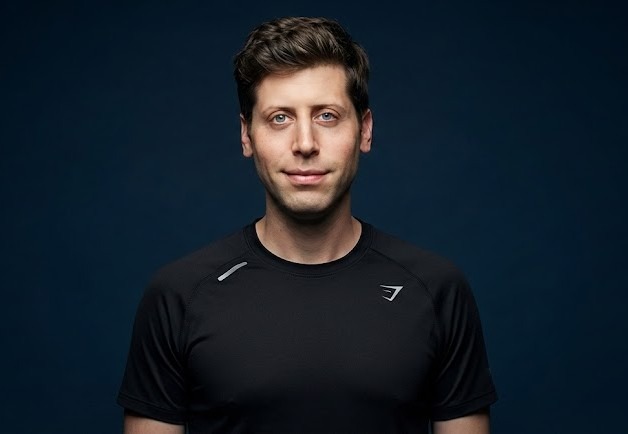

Sam Altman
The Operator Who Turned OpenAI Into a Public Utility
Executive Introduction
As CEO of OpenAI, Sam Altman oversaw the release of ChatGPT in late 2022, an event that accelerated artificial intelligence from a research discipline and enterprise tool into a daily working system for hundreds of millions of people.
That release redefined expectations around knowledge work, education, software, and creative production.
Sam Altman did not invent artificial intelligence. His influence comes from something more consequential: he organized it, funded it, released it, and placed it directly into the hands of the public at a moment when the world was structurally unprepared for it.
Altman’s significance lies in how he operates. He is not a model architect or a laboratory scientist. He is an infrastructure builder. His focus has consistently been on scale, distribution, capital coordination, and timing.
Where others refined technology in isolation, Altman prioritized getting it into circulation, accepting imperfection in exchange for momentum.
This biography explains how Sam Altman developed that operating posture, how it shaped OpenAI’s rise, and why his approach now sits at the center of global debates about power, governance, labor, and the future of artificial intelligence.
Early Orientation Toward Systems
Purpose: This section explains how Altman’s early interests shaped his long-term focus on infrastructure rather than products.
Altman grew up in the Midwest, removed from Silicon Valley’s cultural echo chamber. From a young age, his interests centered on computers, energy, and large-scale technological change. These were not hobbyist curiosities. They were long-term fascinations with how systems reshape societies.
Unlike founders drawn to consumer brands or lifestyle innovation, Altman consistently gravitated toward foundational layers. He paid attention to what everything else depended on. That instinct would later define both his investment choices and his leadership style.
This early orientation matters because it explains his comfort operating far upstream. He has always been less interested in polish than in placement. Less interested in narrative than in leverage.
Key Executive Insights
- Focused early on systems, not surface products
- Interested in long-term impact rather than short-term wins
- Comfortable thinking in decades, not cycles
This mindset carried directly into his education and early career decisions.
Stanford and the First Operator Cycle
Purpose: This section clarifies how Altman learned execution through real-world pressure rather than theory.
Altman enrolled at Stanford University to study computer science with a particular interest in artificial intelligence. At the time, AI was unfashionable, underfunded, and viewed as speculative. During his time there, he chose to leave before completing his degree to pursue building in the real world.
His first company, Loopt, was a mobile location-sharing application launched before smartphones became mainstream. The company did not define a category, but it provided Altman with something more valuable than notoriety: operational education.
Through Loopt, he learned how venture capital functions, how platforms gain or lose relevance, and how timing can outweigh technical quality. When the company was acquired in 2012, Altman exited with clarity rather than celebration.
Key Executive Insights
- Prioritized execution over credentials
- Learned capital dynamics early
- Developed tolerance for uncertainty
This experience pushed him upstream, toward environments where leverage compounded.
Y Combinator and Belief Coordination
Purpose: This section explains how Altman developed his ability to align people, capital, and direction.
Altman joined Y Combinator in 2011 and became its president in 2014 at the age of 28. In that role, he was no longer building a single company. He was shaping an ecosystem.
At Y Combinator, Altman refined a skill that would later define his leadership at OpenAI: belief coordination. He demonstrated an ability to align founders, investors, and institutions around a shared future before its outcomes were visible.
Sam Altman was not the most technical person in the room. He did not need to be. His effectiveness came from clarity, conviction, and an ability to move resources quickly toward emerging opportunity.
Key Executive Insights
- Learned how to scale conviction
- Became fluent in institutional leverage
- Shifted from builder to orchestrator
Over time, Y Combinator became secondary to a deeper focus.
OpenAI and the Shift to Infrastructure Power
Purpose: This section explains why OpenAI’s structure mattered as much as its research.
OpenAI was founded in 2015 with the stated goal of developing artificial general intelligence for the benefit of humanity. From the outset, Altman understood a critical constraint: advanced intelligence requires immense capital, energy, and computing power.
In 2019, he supported restructuring OpenAI to include a for-profit arm capable of raising large-scale funding. This decision was controversial, fracturing relationships and triggering debate about mission and control. It also made OpenAI viable at scale.
That restructuring enabled deep partnerships, massive infrastructure investment, and rapid model deployment. It transformed OpenAI from a research lab into a foundational technology organization.
Key Executive Insights
- Recognized capital as a limiting factor
- Prioritized survivability over purity
- Positioned OpenAI for global relevance
This decision set the stage for OpenAI’s defining moment.
ChatGPT and Public Release Strategy
Purpose: This section explains why timing mattered more than perfection.
In November 2022, OpenAI released ChatGPT to the public. Internally, there was hesitation. The model was capable but incomplete. Many argued it was better to wait.
Altman pushed for release.
That decision placed artificial intelligence directly into public use, reshaping how people interacted with information and work. ChatGPT did not introduce AI to experts. It normalized AI for everyone else.
The release marked a transition point. AI stopped being theoretical. It became practical.
Key Executive Insights
- Favored circulation over refinement
- Understood adoption as a strategic moat
- Shifted AI from novelty to utility
The consequences of that release continue to compound.
Leadership Under Pressure
Purpose: This section explains the tension created by speed and scale.
Altman’s leadership style combines long-range projection with short-cycle action. This produces momentum, but it also produces strain.
In late 2023, OpenAI’s nonprofit board briefly removed him as CEO, citing governance concerns. Within days, employees, partners, and investors reacted strongly. The board reversed course, and Altman was reinstated.
The episode revealed a structural reality: OpenAI had become too central to global AI development to tolerate instability. Governance, not technology, had become the bottleneck.
Key Executive Insights
- Speed creates governance friction
- Centrality alters power dynamics
- Stability becomes strategic
This incident reshaped perceptions of both Altman and OpenAI.
Beyond Software: Energy, Identity, and Scale
Purpose: This section explains why Altman’s focus extends beyond GPT models.
Altman’s broader portfolio reflects a consistent logic. Artificial intelligence is constrained by energy, compute, and trust. He has invested accordingly.
His involvement in nuclear energy projects addresses long-term power demand. His interest in digital identity systems reflects the need to distinguish humans from machines. Hardware partnerships signal recognition that interfaces matter as much as intelligence.
These efforts reveal a systems-level view of the future.
Key Executive Insights
- AI depends on energy infrastructure
- Trust becomes a core resource
- Interfaces shape adoption
Sam Altman is not betting on one outcome. He is shaping a whole new environment.
Fatherhood and Long-Term Responsibility
Purpose: This section contextualizes Altman’s time horizon.
As a new father, Altman has spoken about responsibility in practical terms. Not restraint, but obligation. He frames his work as shaping conditions that will persist beyond his own tenure.
He has stated that he expects artificial intelligence to eventually manage organizations, including OpenAI itself. This view reflects a willingness to design systems that outlast their creators.
Key Executive Insights
- Thinks beyond personal relevance
- Designs for succession
- Accepts replacement by systems
This perspective informs his current decisions.
Conclusion: What Sam Altman Represents
Sam Altman represents a shift in how power operates in AI technology. He is neither inventor nor evangelist. He is an organizer of inevitability.
His influence comes from recognizing where AI systems are heading, then arranging capital, infrastructure, and distribution so that transition becomes unavoidable.
Understanding Altman is not about admiration or criticism. It is about understanding how modern power is built.
When artificial intelligence becomes infrastructure, those who organize it shape the future.
Final Invitation
This biography is part of Primal Mogul’s ongoing analysis of modern operators and power builders.
Inside Primal Mogul, members gain:
- Structured breakdowns of contemporary leaders
- Clear explanations of power systems
- Practical frameworks for builders
- Context for navigating technological shifts
Choose your next move with understanding, not noise.