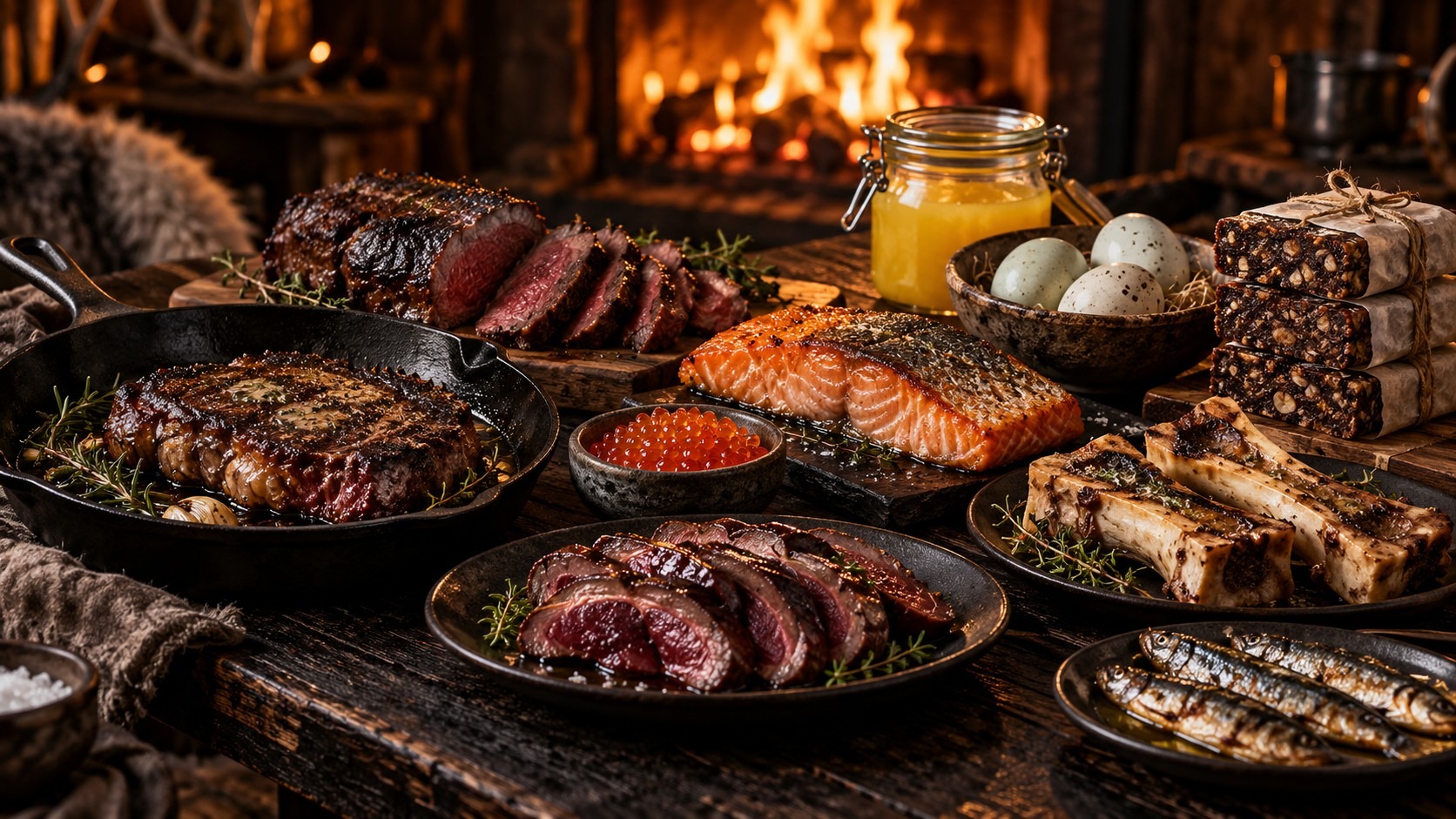

The Ancestral Protocol: An Advanced Carnivore Diet Built for Moguls, Kings, and Builders
Long before supermarkets, food labels, and drive-thru windows, human strength was built on what the hunt and the herd provided.
Arctic hunters lived on seal, whale, caribou, and fish. Plains nations followed the buffalo and carried pemmican across hundreds of miles. In East Africa, Maasai herders built their traditional diet around cattle: meat, milk, and blood.
These cultures lived on different continents, spoke different languages, and faced different climates. Yet they shared one principle: animal foods, eaten nose to tail, were the foundation of strength.
This Power Post isn’t a claim that any single Indigenous nation ate a strict carnivore diet. Most traditional cultures ate plants when seasons allowed.
What follows is a modern protocol inspired by the animal-centered diets of hunting and herding peoples worldwide, built for entrepreneurs and leaders who see food as fuel for focus, endurance, and disciplined execution.
This content frames diet as performance fuel, not treatment for any condition.
The Ancestral Blueprint
What Hunting and Herding Cultures Actually Valued
Modern diet culture taught people to fear fat and favor lean chicken breast. Traditional hunting cultures thought differently. They prized fat as the most valuable part of the animal, because fat meant energy for cold winters, long hunts, and lean seasons.
Organs came first. Many hunting cultures historically ate the liver, heart, and other organs before muscle meat, sometimes reserving them for hunters, elders, or women.
Bones became broth. Marrow was cracked open and eaten. Hides, sinew, and fat were all put to use. Waste was disrespect to the animal and a risk to survival.
Those three ideas form the backbone of this protocol: eat the whole animal, value fat as fuel, and source food with respect.
- Fat was valued as the prize of the hunt.
- Organs were often eaten before muscle meat.
- Bones, marrow, and connective tissue were never wasted.
- Seasonal and regional foods shaped every traditional diet.
- Respect for the animal guided how food was used.
Key Executive Tip: Ancestral eating is a mindset before it’s a menu. Discipline, respect for resources, and zero waste are the same principles that build strong businesses.
The Warrior Food Hierarchy
Organize Your Plate by Nutrient Power
Not all animal foods carry the same value. This hierarchy ranks foods by nutrient density and traditional importance.
| Tier | Foods | Role |
|---|---|---|
| Tier One: Organs | Liver, heart, kidney, marrow, fish roe | The most concentrated nutrition per bite |
| Tier Two: Fatty Red Meat | Grass-fed beef, bison, elk, deer, lamb, goat | The daily foundation of strength and energy |
| Tier Three: Seafood | Salmon, sardines, mackerel, oysters, clams, mussels | Omega-3 fats and ocean minerals |
| Tier Four: Birds and Eggs | Pasture-raised eggs, duck eggs, quail eggs, duck, turkey, chicken | Variety, rich yolks, and lighter proteins |
| Foundation: Fats and Broth | Tallow, ghee, butter, suet, bone broth | Energy and recovery support |
The goal isn’t eating everything daily. It’s building weekly rotation across every tier, the way traditional cultures rotated with the seasons.
Key Executive Tip: Build your week around Tier Two, add organs a few times weekly, and work seafood in regularly. Rotation beats perfection.
Land Proteins
Grass-Fed, Pasture-Raised, and Wild Game
Red meat is the daily foundation of this protocol. Grass-fed beef and bison deliver protein, iron, zinc, and B vitamins. Elk, deer, and wild boar offer lean wild game with deep flavor.
Lamb, mutton, and goat bring pasture-raised richness, and goat meat remains a staple across much of Africa, the Caribbean, and South Asia.
Ostrich offers a lean red meat with a mild taste. Rabbit provides a light wild protein long used by hunting cultures.
Birds round out the land section. Duck and goose carry rich fat. Turkey works well for lighter meals, and naturally raised chicken fits in moderation as part of a varied rotation.
Sourcing matters as much as selection.
Grass-fed and pasture-raised animals typically live closer to how animals lived historically, and many people prefer their flavor and fat profile.
- Make grass-fed beef or bison your weekly foundation.
- Rotate in wild game such as elk, deer, and boar.
- Use lamb, goat, and mutton for variety.
- Choose fattier cuts for sustained energy.
- Treat chicken as part of the rotation, not the center.
Key Executive Tip: Buy a quarter or half share of a grass-fed cow from a local ranch. You’ll often pay less per pound than retail and get organs and bones included.
Sea Proteins
The Omega-3 Arsenal
Coastal peoples built strength from the sea, and seafood brings nutrients land meat can’t fully match.
Salmon, sardines, Atlantic mackerel, herring, and anchovies are rich in omega-3 fats and low in mercury, making them ideal regular choices. Sea bass and red snapper offer clean white fish for variety.
Oysters, clams, mussels, and scallops deliver zinc, iron, and trace minerals in small portions.
Mercury varies widely, so choose wisely:
| Choice | Fish |
|---|---|
| Best everyday picks | Salmon, sardines, anchovies, herring, Atlantic mackerel, canned light or skipjack tuna |
| Occasional | Albacore tuna, red snapper, sea bass |
| Limit or avoid | Bigeye tuna, king mackerel, swordfish |
Raw shellfish carries extra risk. Raw oysters can carry Vibrio bacteria, so cooked oysters or trusted sources are the safer call, especially for anyone with liver conditions or weakened immunity.
- Make small oily fish your seafood foundation.
- Choose lower-mercury tuna like skipjack.
- Use shellfish for concentrated minerals.
- Cook oysters unless sourced with strict safety standards.
Key Executive Tip: Canned sardines and salmon are the most underrated warrior food in the grocery store. They’re affordable, shelf-stable, and nutrient-dense, perfect for busy days.
The Organ Advantage
Nature’s Multivitamin
Organ meats are the most nutrient-dense foods in this protocol. Beef liver is rich in vitamin A, B12, copper, and iron. Heart provides CoQ10 and tastes much like steak.
Kidney, tongue, and sweetbreads add variety. Bone marrow delivers rich fat, and salmon roe brings omega-3s and fat-soluble vitamins.
Liver deserves respect. It’s so rich in vitamin A that modest portions a few times weekly work better than large daily servings, and women should talk with a doctor about intake.
Organ meats are also high in purines, which matters for anyone prone to gout.
Many people struggle with organ taste. Start by grinding liver or heart into ground beef. Grate frozen liver into burgers, or slice heart thin and sear it like steak.
- Eat liver in modest portions a few times weekly.
- Treat heart like steak, seared and sliced.
- Blend organs into ground meat for easy starts.
- Add marrow and roe for rich fat and nutrients.
- Ask a doctor about organ intake if pregnant or prone to gout.
Key Executive Tip: Mix ground liver and heart into ground beef at about one part organ to four parts beef. Most people won’t taste the difference, and the nutrient boost is serious.
Warrior Fats
Why Fat Was the Real Prize
Hunting cultures valued fat because lean meat alone can’t fuel a hard life. Beef tallow and suet are rendered beef fats ideal for cooking. Ghee and butter bring rich dairy fat.
Pastured lard works for high-heat cooking. Marrow bones deliver fat straight from the source.
On a carnivore protocol, fat provides much of your daily energy. Choosing fattier cuts like ribeye, short ribs, and lamb shoulder, or adding tallow or butter to leaner meats, helps maintain steady energy.
- Cook with tallow, ghee, butter, or lard.
- Choose fattier cuts for sustained energy.
- Add fat to lean meats like venison or turkey.
- Render your own tallow from butcher fat trimmings.
Key Executive Tip: Ask your butcher for beef fat trimmings. Many sell them cheaply or give them away, and you can render your own tallow at home.
Pemmican and Field Rations
The Original Performance Food
Pemmican is the signature food of this protocol. Created by Indigenous peoples of North America, its name comes from the Cree word pimîhkân.
Hunters and travelers made it by drying lean meat such as buffalo, elk, or deer, pounding it into a powder, and mixing it with rendered fat. Some recipes added dried berries.
The result was a compact, energy-dense ration that sustained people through long journeys and harsh winters.
A simple modern version:
1. Cook lean meat thoroughly, then dry it at low heat until brittle.
2. Grind the dried meat into a fine powder.
3. Melt rendered tallow and mix it with the powder in roughly equal weights.
4. Add dried berries if you’re following the Animal-Based tier.
5. Press the mixture into bars and store in a cool, dry place.
For safety, follow USDA guidance for dried meat, which recommends cooking meat thoroughly before dehydrating it. Sugar-free jerky and biltong make good modern field rations too.
- Pemmican combines dried meat and rendered fat.
- It’s compact, energy-dense, and travel-ready.
- Berries are optional for the Animal-Based tier.
- Cook meat thoroughly before drying for safety.
Key Executive Tip: Keep pemmican bars in your bag for travel days and long meetings. The same food that carried hunters across the plains can carry you through a twelve-hour build day.
Bone Broth and Collagen
The Recovery Ritual
Traditional cultures wasted nothing, and bones became broth. Simmering marrow bones, oxtail, chicken feet, and cartilage for many hours draws out gelatin and minerals into a rich, savory broth.
Collagen-rich cuts like short ribs and oxtail also deliver connective tissue nutrition that lean muscle meat lacks.
A warm cup of broth with a pinch of sea salt makes a strong start to the day or a calming evening ritual.
- Simmer bones slowly for rich, gelatinous broth.
- Use oxtail, chicken feet, and cartilage for collagen.
- Salt broth well for electrolyte support.
- Make large batches and freeze portions.
Key Executive Tip: Broth that turns to jelly in the refrigerator is rich in gelatin. That’s the signal you made it right.
Two Protocol Tiers
Strict Warrior vs. Animal-Based Warrior
| Two Protocol Tiers | Strict Warrior | Animal-Based Warrior |
|---|---|---|
| Foods | Meat, organs, seafood, eggs, animal fats | All Strict foods plus honey, fruit, berries, and dairy |
| Best for | Experienced carnivore eaters | Beginners and highly active people |
| Strengths | Simplicity, discipline | Flexibility, easier adaptation |
| Considerations | Harder to sustain socially | Requires portion awareness |
Dairy deserves care. Aged cheeses, kefir, and butter suit many people. Raw goat milk is popular in ancestral circles, but federal health agencies warn it can carry harmful bacteria like Listeria and E. coli, and its sale is legal in some states and banned in others.
Pregnant people, children, older adults, and anyone with weakened immunity should avoid it.
Key Executive Tip: Start with the Animal-Based tier. Master consistency first, then decide whether stricter eating serves your performance.
The Adaptation Phase
Electrolytes, Hydration, and the First Two Weeks
Many people report fatigue, headaches, or low energy during the first one to two weeks of a carnivore protocol, often called “carnivore flu.” Much of this relates to fluid and electrolyte shifts as carbohydrate intake drops.
Salt your food generously with unrefined sea salt unless your doctor has advised otherwise. Drink water consistently. Potassium and magnesium matter too, and organ meats, seafood, and broth help supply them.
- Salt meals well with unrefined sea salt.
- Drink water steadily throughout the day.
- Use broth for sodium and minerals.
- Expect adjustment during the first two weeks.
Key Executive Tip: Start the protocol during a lighter work week. Don’t launch a major dietary change the same week as a major business launch.
Sourcing Standards
Buy Smart, Even on a Budget
Grass-fed, pasture-raised, and wild-caught foods cost more, but smart sourcing narrows the gap.
Buy whole animal shares from local ranches, join a meat cooperative, shop farmers markets near closing time, and use canned fish generously. Ground beef and organ meats are among the most affordable nutrient-dense foods available.
- Buy cow or bison shares from local ranches.
- Choose affordable cuts and ground meat.
- Use canned sardines and salmon weekly.
- Ask butchers for organs, bones, and fat.
Key Executive Tip: Organ meats are often the cheapest items at the butcher counter and the most nutrient-dense. The ancestors understood value long before economists did.
A Warrior’s Day of Eating
Sample Template for an Entrepreneur’s Schedule
| Meal | Example |
|---|---|
| Morning | Pasture-raised or duck eggs cooked in ghee, plus a cup of salted bone broth |
| Midday | Grass-fed ribeye or bison burger with blended liver, plus sardines on the side |
| Field ration | Pemmican bar or sugar-free biltong |
| Evening | Wild-caught salmon or lamb chops cooked in tallow |
| Animal-Based option | Add berries, raw honey, or aged cheese |
Many people on this protocol naturally eat two larger meals daily rather than three. Let hunger guide meal timing, and adjust portions to your activity level.
Safety and Smart Practice
Who Should Talk to a Doctor First
Any major dietary change deserves professional input, especially for people with kidney disease, heart conditions, diabetes, gout, digestive conditions, or a history of disordered eating, and for anyone who is pregnant or breastfeeding.
Some people see significant cholesterol changes on high-fat animal diets, so periodic bloodwork with your doctor is a smart habit.
- Talk to your doctor before major dietary changes.
- Get periodic bloodwork to monitor how your body responds.
- Avoid raw milk and raw shellfish if you’re in a higher-risk group.
- Respect your body’s signals and adjust accordingly.
Key Executive Tip: Warriors studied their terrain before battle. Get baseline bloodwork before you start, so you can measure how this protocol works for your body.
Mogul Frequently Asked Questions
Is this how Indigenous warriors ate?
It’s inspired by animal-centered diets of hunting and herding cultures. Most traditional diets also included plants when available.
Can I eat fruit on this protocol?
Yes, on the Animal-Based Warrior tier.
Is raw goat milk safe?
Health agencies warn raw milk can carry harmful bacteria. Higher-risk groups should avoid it, and legality varies by state.
How often should I eat liver?
Modest portions a few times weekly work for most people, due to its high vitamin A content.
Will I feel tired at first?
Many people report an adjustment period. Salt, water, and broth often help.
Can I follow this on a budget?
Yes. Ground beef, organ meats, eggs, and canned fish are affordable and nutrient-dense.
Power Conclusion
The Ancestral Warrior Protocol is about honoring principles that sustained human strength for thousands of years: eat the whole animal, value fat as fuel, source with respect, and waste nothing.
From pemmican on the Plains to cattle herds in East Africa to the fish and game of the Arctic, animal-centered cultures built endurance through discipline at the table.
Bring that same discipline to your plate, and you bring it to your work, your family, and everything you’re building.
Fuel Your Performance With PrimalMogul AI
PrimalMogul AI gives entrepreneurs a private team of AI advisors to support performance, discipline, and long-term growth in business and life.
- Plan meal rotations and sourcing strategies around your schedule.
- Build daily routines that support focus and endurance.
- Prepare questions to discuss with your doctor before major changes.
PrimalMogul AI is not made up of medical doctors or nutritionists. This content is educational and frames diet as fuel for performance and leadership, not as treatment for any condition. Consult your doctor before making major dietary changes, and do your own research.
Sources to Cite and Link:
- FDA.gov: “Advice About Eating Fish” (mercury guidance chart)
- CDC.gov: Raw milk safety information
- FDA.gov: Vibrio and raw oyster safety
- USDA Food Safety and Inspection Service: Jerky and food safety guidance
- NIH Office of Dietary Supplements: Vitamin A fact sheet
- Canadian Encyclopedia or university sources: History of pemmican