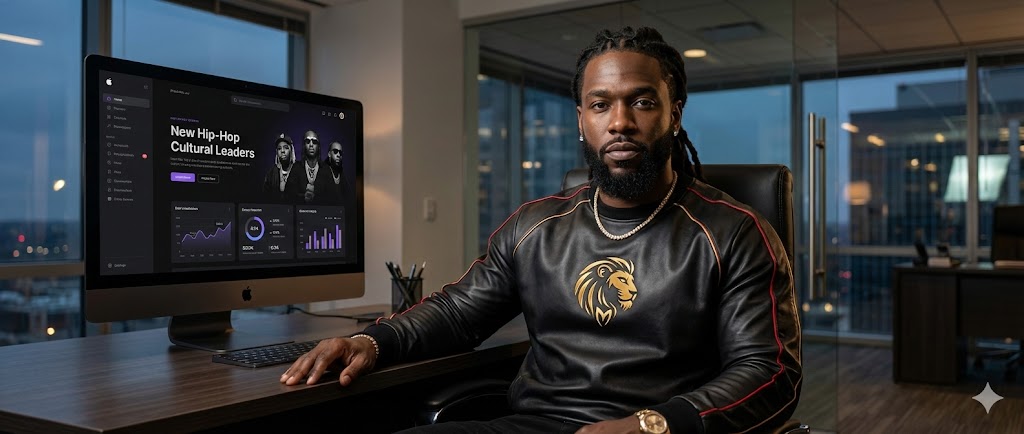
Hip-Hop Culture to High Tech: How Cultural Influence Is Converting Into AI Powered Business Empires
Power Introduction: Hip-Hop Culture to High Tech
Hip-Hop Culture to High Tech: Hip hop began as a cultural expression rooted in rhythm, storytelling, fashion, and survival economics. Over four decades, it evolved into a global economic engine that influences music, sports, fashion, AI technology, and media.
Today, a new shift is underway. Cultural leaders are no longer just monetizing music or brand endorsements. They are acquiring equity, launching technology platforms, building media companies, and integrating artificial intelligence into their business models.
This transformation reflects a deeper evolution in hip hop business strategy. Influence is no longer the final product. Infrastructure is. The most strategic artists and cultural entrepreneurs now convert audience attention into ownership of platforms, software, intellectual property, and recurring revenue systems.
In 2026, the question is no longer whether hip hop can generate wealth. The question is who controls the systems behind the wealth.
This Power Post explains how cultural entrepreneurship is moving from entertainment into AI-powered business empires. It examines music industry business models, equity strategies, SaaS infrastructure, licensing economics, and AI in entertainment.
The goal is clarity. Influence without ownership creates temporary visibility. Influence combined with technology creates enduring leverage.
The Evolution of Hip Hop Business Strategy
From Record Deals to Equity Stakes
In the early decades, hip hop wealth was largely tied to record sales, touring, and brand sponsorships. Revenue flowed through labels and distributors. Artists earned advances, royalties, and endorsement fees. Control remained concentrated in traditional corporate structures.
Over time, a strategic shift occurred. Cultural leaders began studying business architecture. They moved beyond artist status into ownership positions. Instead of negotiating only for royalties, they negotiated for equity.
Key strategic transitions included:
- Launching independent labels rather than relying solely on major record contracts
- Acquiring stakes in spirt brands, apparel lines, and consumer products
- Building production companies and publishing catalogs
- Structuring joint ventures instead of simple endorsement deals
This shift marked the beginning of cultural entrepreneurship as a discipline. Influence became a negotiating asset, not the end goal. The artist evolved into operator.
Executive Insight
When influence converts into equity, revenue shifts from transactional to exponential. That distinction defines the difference between entertainer income and empire-level wealth.
Cultural Entrepreneurship in the Digital AI Era
Attention Is the Raw Material
Modern cultural entrepreneurs operate in a media ecosystem driven by attention metrics. Streams, followers, subscribers, and engagement rates determine leverage. However, attention alone is unstable if it lives entirely on rented platforms.
The strategic objective is to convert attention into owned digital assets.
This includes:
- Email databases and SMS communities
- Subscription-based membership platforms
- Direct-to-consumer e-commerce systems
- Intellectual property catalogs
- Proprietary media channels
By controlling distribution, creators reduce dependency on third-party algorithms. Ownership of distribution channels strengthens negotiation power with labels, brands, and platforms.
Infrastructure Over Popularity
The most resilient music industry business models today integrate:
- Direct streaming monetization
- Merchandise automation
- Licensing pipelines for film, gaming, and advertising
- Subscription fan communities
- Educational or coaching products
- Technology investments
This layered structure stabilizes income and creates compounding leverage.
Executive Insight
Cultural entrepreneurship becomes powerful when the business model extends beyond performance and into platform architecture.

AI in Entertainment: The New Leverage Layer
Artificial intelligence is now reshaping production, distribution, and monetization in entertainment. Artists who understand AI do not replace creativity with automation. They enhance speed, scalability, and data intelligence.
AI in Content Production
AI tools assist in:
- Script generation for video campaigns
- Automated editing and visual asset creation
- Predictive analytics for audience targeting
- Royalty tracking and financial forecasting
- Automated marketing copy and ad optimization
These systems reduce production time while increasing output consistency.
AI in Audience Intelligence
Modern entertainment strategy increasingly relies on data models that analyze:
- Listener behavior
- Geographic streaming clusters
- Merchandise conversion patterns
- Fan retention rates
- Content engagement cycles
With AI-driven analytics, campaigns become precision-engineered rather than guesswork-driven.
Executive Insight
AI in entertainment shifts the advantage toward operators who combine creativity with system-level intelligence.
The Rise of Media Platforms Owned by Cultural Leaders
Platform Ownership as Strategic Control
Instead of remaining dependent on streaming services or television networks, cultural leaders are building or investing in:
- Independent streaming platforms
- Digital publishing brands
- Gaming communities
- Creator marketplaces
Ownership of media platforms creates long-term control over distribution and monetization terms.
Key structural advantages include:
- Retaining higher profit margins
- Collecting user data
- Creating cross-promotional ecosystems
- Monetizing advertising directly
- Launching affiliated digital products
Network Effects
When a cultural entrepreneur controls a platform, every new user increases the value of the ecosystem. This mirrors technology company models more than traditional music models.
Executive Insight
Media ownership transforms artists into infrastructure architects.
Licensing, IP, and the Long-Term Wealth Engine
Intellectual Property as Core Asset
The most powerful music industry business models revolve around intellectual property ownership. Songs, masters, publishing rights, trademarks, and brand imagery generate recurring revenue for decades.
Key licensing channels include:
- Film and television placements
- Commercial advertising
- Video games
- Streaming playlists
- International distribution
- Brand collaborations
When IP is structured correctly, income continues even when the artist is not actively performing.
Catalog Acquisition Strategy
Some cultural leaders reinvest earnings into acquiring catalogs. This converts entertainment profits into asset-based wealth.
Executive Insight
Ownership of intellectual property creates financial endurance beyond performance cycles.
SaaS Infrastructure and the Creator Economy
From Artist to Software Operator
A new frontier has emerged where cultural entrepreneurs launch software AI tools tailored to creators.
These include:
- Distribution dashboards
- Community membership platforms
- AI-driven marketing assistants
- Education portals
- Creator monetization tools
By offering AI tools to other creators, cultural leaders expand revenue beyond their personal brand.
Recurring Revenue Systems
Software-based platforms introduce subscription revenue models. Predictable monthly income increases business valuation and investor interest.
Core SaaS benefits include:
- Scalable distribution
- High gross margins
- Automated delivery
- Global reach
- Data-driven optimization
Executive Insight
When cultural influence evolves into software ownership, the valuation framework shifts from entertainer metrics to technology metrics.
Strategic Blueprint for Building an AI Powered Cultural Empire
For disciplined builders analyzing this shift, the structure is clear.
Phase One: Establish Cultural Authority
- Build authentic narrative and community trust
- Develop multi-platform presence
- Capture direct audience data
Phase Two: Layer Ownership
- Retain intellectual property rights
- Launch merchandise and licensing pipelines
- Form strategic equity partnerships
Phase Three: Integrate AI and Automation
- Deploy AI tools for content and analytics
- Automate marketing workflows
- Implement subscription-based revenue models
Phase Four: Build Infrastructure
- Launch proprietary media platforms
- Create SaaS-style tools for your audience
- Expand into education, consulting, or digital products
Each phase compounds the previous one.
Executive Insight
Cultural dominance without system ownership remains temporary. Cultural dominance integrated with AI and infrastructure becomes durable.
Frequently Asked Questions
What is hip hop business strategy in 2026?
It refers to leveraging cultural influence to acquire equity, control intellectual property, build media platforms, and integrate AI-driven systems into monetization structures.
How are artists using AI in entertainment?
They use AI for content production, audience analytics, automated marketing, royalty tracking, and predictive trend analysis.
Why is platform ownership important for cultural entrepreneurs?
Platform ownership provides control over distribution, user data, revenue share, and long-term strategic direction.
How do music industry business models differ today compared to the past?
Modern models emphasize diversified income streams including licensing, subscription communities, SaaS tools, and intellectual property ownership rather than relying solely on record sales.
What is cultural entrepreneurship?
Cultural entrepreneurship is the practice of converting cultural influence into structured business ownership, equity, and scalable infrastructure.
Can creators build technology platforms without technical backgrounds?
Yes. With no-code tools, AI assistants, and software partnerships, creators can build or co-own platforms without writing code.
Is AI replacing human creativity in music?
No. AI enhances production efficiency and analytics but does not replace authentic creative expression or cultural storytelling.
Power Conclusion
Hip hop has always been more than music. It is a system of influence, language, identity, and economic movement.
In 2026, that system is merging with artificial intelligence, SaaS infrastructure, and media ownership. Cultural leaders who understand this shift are building assets that extend beyond performance cycles.
The central lesson is structural. Influence generates visibility. Ownership generates leverage. AI accelerates both. When these elements align, cultural entrepreneurship evolves into technology-powered enterprise.
This transformation reflects a broader truth in modern business. The future belongs to operators who combine creativity with system architecture. Artists who master technology move from content producers to platform owners. Cultural brands that integrate AI move from entertainment to infrastructure.
The era of temporary fame is giving way to structured digital ownership.
Join Our Membership Program
Serious builders who want to understand AI-driven business infrastructure, cultural positioning, and ownership systems in depth should operate inside a structured environment.
Inside Primal Mogul membership you gain:
- Structured, system-based education for real execution
- Access to AI tools, guided templates, and cultural strategy systems
- Continuous intelligence upgrades, reports, and community insights