Culture Creates the Demand. Ownership Collects the Money.
Black and Latino communities help shape what America watches, wears, says, eats, streams, and buys. The larger economic question is who controls the rights, customer relationships, property, and distribution systems that convert cultural influence into durable wealth.
Creating the trend earns attention. Owning the system around the trend creates wealth.
A phrase can begin in a neighborhood, move through social media, and appear months later in a national advertising campaign.
From one creator’s phone, a dance can travel into music videos, brand promotions, and television. Local food traditions can inspire restaurant concepts, packaged products, and retail expansion.
Culture often creates commercial demand before major institutions understand where that demand came from.
Yet influence does not automatically produce equity. Visibility does not guarantee licensing rights. Public recognition does not secure control over the customer, the product, the property, or the channel that delivers the idea to market.
That distinction is where cultural economics becomes serious.
Black and Latino communities are not one uniform market. Geography, class, nationality, generation, and industry shape different experiences.
Even so, a recurring pattern appears across music, fashion, food, entertainment, sports, and digital media: communities create demand while better-capitalized companies often control the systems that collect the money.
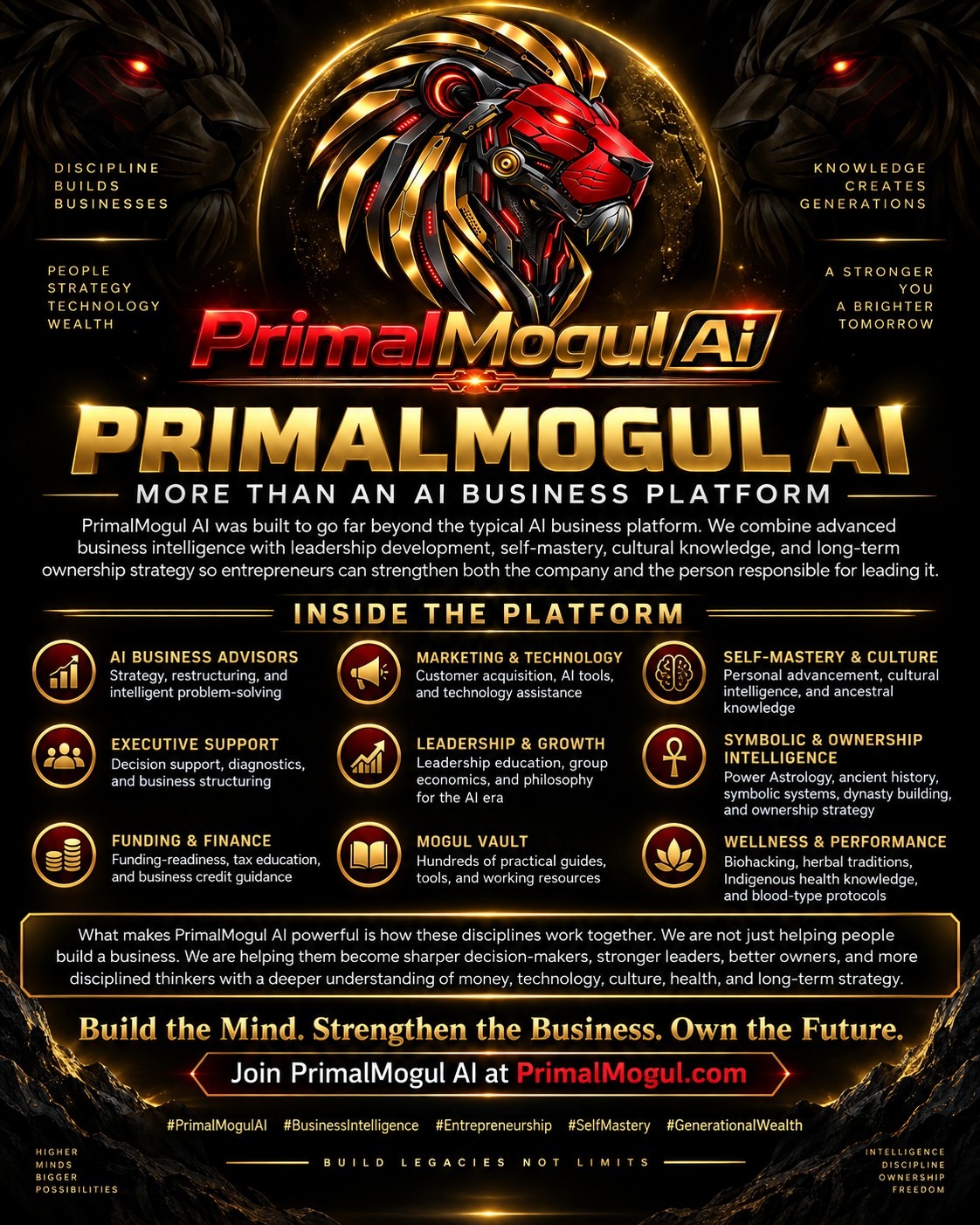
PrimalMogul AI examines that gap through one question: when culture creates value, what remains under the creator’s control after the market responds?
What Is the Difference Between Cultural Influence and Economic Ownership?
Cultural influence shapes attention, language, taste, identity, and consumer behavior. Economic ownership controls the rights, contracts, customer relationships, property, equity, and distribution channels that determine who receives the financial value repeatedly.
A creator may start the movement without owning the trademark. An artist may record the song without controlling the master.
A chef may popularize a concept while another company owns the packaged product. An influencer may attract the audience while a platform controls access to that audience.
Cultural relevance can open the door. Ownership decides who keeps the building.
Key Intelligence Takeaways
- Creation starts the economic chain without controlling every stage that follows.
- Attention becomes fragile when another company controls audience access.
- Distribution carries bargaining power because it controls reach, transactions, and repeat access.
- Intellectual property should be identified before negotiations become serious.
- Licensing can permit use while preserving ownership under defined terms.
Direct customer relationships reduce dependence on outside platforms.
Cultural Influence Is Not a Business Model
Culture is often discussed through visibility. Business requires a deeper examination.
A song may become culturally important because people repeat it, remix it, dance to it, quote it, and connect it to identity. Revenue, however, can move through recording rights, publishing, streaming, touring, sponsorships, merchandise, advertising, and licensing.
The public may see one artist. Behind that image, several companies may hold different rights.
Fashion follows the same pattern. A designer creates the look. Influencers build desire. Manufacturers produce the item. Retailers control placement. Digital platforms process the transaction.
Each participant receives value according to contracts and ownership, not according to who made the idea culturally important first.
Cultural influence can be enormous while retained wealth remains limited. Attention creates opportunity, but ownership determines what remains.
The Cultural Value Chain
PrimalMogul AI organizes cultural economics through five stages:
Creation → Attention → Distribution → Monetization → Ownership
Value can leave the creator’s hands at every point.
1. Creation: Who Made the Work?
This stage includes the song, design, photograph, recipe, phrase, video format, software, teaching system, event concept, or brand identity.
The first risk appears when creators fail to document authorship, collaborators, payment terms, ownership percentages, and permissions. Informal relationships may feel natural when little money is involved. Conflict often appears after the asset gains value.
Creators should identify what was made, who contributed, what each person owns, and how future use will be handled. Formal agreements matter because memory changes when money enters the room.
The commercial question is direct: did you create an asset, or did you create an asset that someone else can control?
2. Attention: Who Attracted the Audience?
Commercial visibility begins when the work attracts attention.
Followers, views, likes, and shares can create opportunity, but they do not automatically create ownership. Those numbers represent access granted through a platform.
Recommendation systems change. Reach declines. Accounts face restrictions. Payment terms shift.
Creators who have no email list, customer records, website, membership, direct store, or event database may possess attention without controlling the relationship.
Audience value grows when people can move from public visibility into an environment the creator owns.
3. Distribution: Who Controls Market Access?
Market access determines how the work reaches buyers.
Publishers, labels, retailers, manufacturers, streaming services, app stores, and digital platforms occupy this layer.
Distribution companies gain bargaining power because they solve a difficult problem: reaching customers at volume and completing transactions.
A creator who needs one distributor more than the distributor needs that creator enters the negotiation from a weaker position.
Complete independence is not always the answer. Stronger positioning comes from alternatives. A creator with direct sales, audience records, proven demand, and multiple potential partners can negotiate without surrendering every meaningful right.
4. Monetization: Who Turns Attention Into Revenue?
Revenue begins when attention becomes a transaction.
Income may come from product sales, subscriptions, licensing fees, royalties, sponsorships, consulting, ticket sales, merchandise, advertising, or equity participation.
A creator with a large audience but no offer has influence without a commercial system. Companies with products but no audience hold inventory without demand.
Cultural enterprise requires both creation and conversion.
5. Ownership: Who Keeps the Long-Term Value?
Long-term control determines what remains after the campaign, release, viral moment, or first product cycle ends.
Controlled assets may include brand names, original works, customer records, recurring contracts, equity, property, licensing authority, and business data.
A creator who owns the brand, rights, and customer relationship can continue earning after public attention shifts elsewhere.
Someone who owns only visibility must keep producing attention to remain economically relevant.
That difference separates cultural participation from cultural control.
Where Cultural Value Commonly Leaves the Creator
Publishers and Labels
Publishers and labels can provide financing, promotion, administration, legal support, development, and distribution. Those services have real value.
Problems begin when creators exchange broad rights without understanding duration, territory, recoupment, accounting, approval authority, or reversion.
A large advance can look like wealth while functioning as money paid against future earnings. The rights exchanged matter more than the headline amount.
Platforms and Technology Companies
Platforms can place creators in front of millions of people. They also control recommendation systems, advertising marketplaces, data access, user experience, and payment rules.
Use platforms for reach. Do not confuse reach with possession.
Some audience attention should move toward an email list, website, store, membership, event, or customer system controlled by the creator.
Manufacturers and Retailers
Manufacturing and retail require capital, logistics, inventory planning, quality control, and operational skill. Creators may reasonably accept royalties because another company carries those responsibilities.
Terms still matter.
Guarantees, audit rights, quality standards, exclusivity, territory, and approval authority can determine whether the partnership creates opportunity or dependency.
Investors
Capital can expand a company, but equity transfers part of its future value and often part of its decision authority.
Founders should know the difference between financing growth and permanently surrendering control because they entered the negotiation without financial preparation.
Landlords and Property Owners
Creative communities can increase traffic, visibility, tourism, and neighborhood value. Yet many of the businesses creating that value rent the spaces where it happens.
Rising rents can push cultural contributors out of districts they helped make desirable.
Property ownership is not realistic for every business. Long-term leases, purchase options, and shared ownership structures still deserve study.
Representation Without Participation
Representation matters, but visibility alone may leave the economic structure unchanged.
More Black and Latino faces in campaigns can carry cultural significance. A complete business analysis also asks who owns the agency, who controls the production company, who holds the licensing rights, who owns the retail property, who manages the platform, and who receives equity when the idea grows.
Cultural pride becomes commercially stronger when it includes contract literacy, intellectual property awareness, financial judgment, and ownership planning.
Influence without participation can create applause for the community while leaving the financial control elsewhere.
The Cultural Value Capture Model
The Cultural Value Capture Model gives creators five responsibilities: Protect, Participate, Distribute, Retain, and Reinvest.
Protect the Asset
Identify the asset before the market assigns greater value to it.
Document collaborators, ownership percentages, payment terms, permissions, and creative contributions. Review names, designs, original works, agreements, and confidential information with qualified legal professionals when the stakes justify it.
Protection prepares the creator for the moment when the work becomes valuable enough to attract competing claims.
Participate in the Upside
Do not negotiate only for the first payment.
Depending on the opportunity, examine licensing fees, royalties, revenue participation, equity, renewal payments, guarantees, and approval rights.
Not every agreement will support every term. The principle is to ask how value continues after the initial transaction.
Distribute Through More Than One Door
Develop at least one channel that does not depend completely on another company’s permission.
That channel might be an email list, direct store, paid community, licensing catalog, live event, local customer base, or company website.
Direct distribution strengthens the position from which partnerships are negotiated.
Retain the Customer Relationship
Keep the customer relationship whenever possible.
Collect permission-based contact information. Track repeat purchases. Build follow-up systems. Study what customers buy, request, and return for.
A transaction becomes more valuable when it begins a relationship instead of ending one.
Reinvest Cultural Income
Convert cultural income into productive assets.
Reinvestment may fund legal review, production, technology, staff, inventory, reserves, property, or additional intellectual property.
Visible consumption displays the money. Reinvestment strengthens the system that produced it.
Common Mistakes That Weaken Cultural Ownership
Mistaking Visibility for Leverage
Attention matters, but bargaining power grows when the audience can be reached directly.
Signing Before Valuation
Creators often negotiate too early because they have not measured demand, documented results, or examined alternatives.
Accepting Fees Without Examining Participation
A one-time payment may be appropriate, but it should be a conscious decision rather than the only option considered.
Ignoring Contract Structure
Duration, territory, exclusivity, termination, approval, ownership, and accounting determine the real agreement.
Trying to Control Every Function Alone
Control does not require personally handling manufacturing, distribution, accounting, legal review, and fulfillment.
Spending Cultural Income Too Early
Public consumption can remove the capital needed to protect and expand the asset.
What This Means for the PrimalMogul AI Reader
- Better deal judgment: Separate attention, revenue, profit, equity, and ownership before evaluating an opportunity.
- Stronger intellectual property decisions: Identify which works, brands, systems, designs, and agreements require professional review.
- Improved distribution strategy: Use major platforms while developing direct channels.
- Greater customer control: Convert followers and buyers into permission-based relationships.
- More disciplined reinvestment: Direct income toward productive business assets.
- Stronger negotiations: Enter partnerships with evidence, alternatives, and defined priorities.
Cultural economics changes the question from “Did we influence the market?” to “What did we retain?”
The 30-Day Cultural Ownership Plan
First Seven Days: Inventory
List every creative asset, brand name, design, product, customer list, agreement, and distribution channel connected to your business.
Second Phase: Examine
Review ownership, licensing, collaborator terms, platform dependence, and missing documentation.
Direct Access Phase: Days 15-21
Create one direct channel, such as an email list, store, membership, licensing page, or customer follow-up system.
Final Nine Days: Reinvest
Strengthen one revenue source and direct part of the proceeds into an asset the business controls.
Measure progress through documented rights, retained customer contacts, recurring revenue, and reduced dependence.
Power Conclusion
Culture can create demand before institutions understand where the demand came from. That speed creates opportunity, but it also leaves creators exposed when contracts, capital, and distribution are controlled elsewhere.
Rejecting publishers, platforms, manufacturers, retailers, investors, or technology companies is not the answer. Expansion often requires partnerships.
The stronger position is entering those relationships knowing what you created, what you are giving away, what you are keeping, and how the customer relationship will survive the agreement.
Creating the trend earns attention. Owning the system around the trend creates wealth.
Cultural authority becomes economic power when creators retain rights, build direct access, negotiate participation, and reinvest.
Mogul Frequently Asked Questions
Is cultural influence the same as business ownership?
Cultural influence can shape demand and public behavior, but business ownership controls the rights, contracts, assets, and customer relationships that retain economic value.
Should creators avoid publishers, platforms, and investors?
No. Strong partners can provide capital, expertise, reach, and infrastructure. The goal is to understand the terms and preserve the rights that matter most.
Is licensing the same as selling an asset?
Licensing generally permits another party to use an asset under defined conditions. Selling or assigning an asset transfers ownership. Final agreements should be reviewed by a qualified attorney.
What should creators protect first?
Begin with assets central to revenue and identity, including brand names, original works, customer records, designs, contracts, and confidential business information.
Why does direct audience access matter?
Direct access reduces dependence on platform algorithms and gives the creator a reliable way to communicate with customers, present offers, and study demand.
Turn Cultural Influence Into Business Structure With PrimalMogul Elite
PrimalMogul AI is built around a direct principle: culture should not stop at visibility. It should support ownership, informed decisions, and controlled business assets.
PrimalMogul Elite is the recommended membership level for creators and founders expanding from content into structured commerce.
Elite Expands.
- Chairman AI: Examine ownership decisions, partnerships, negotiations, and leadership responsibility.
- CMO AI: Develop positioning, customer strategy, direct audience systems, and campaigns.
- PrimalWealth AI: Study revenue structure, reinvestment, funding readiness, and financial risk.
- Content Lab: Convert cultural knowledge into organized media, offers, and commercial assets.
Join PrimalMogul AI Elite and build the business system behind your cultural influence.