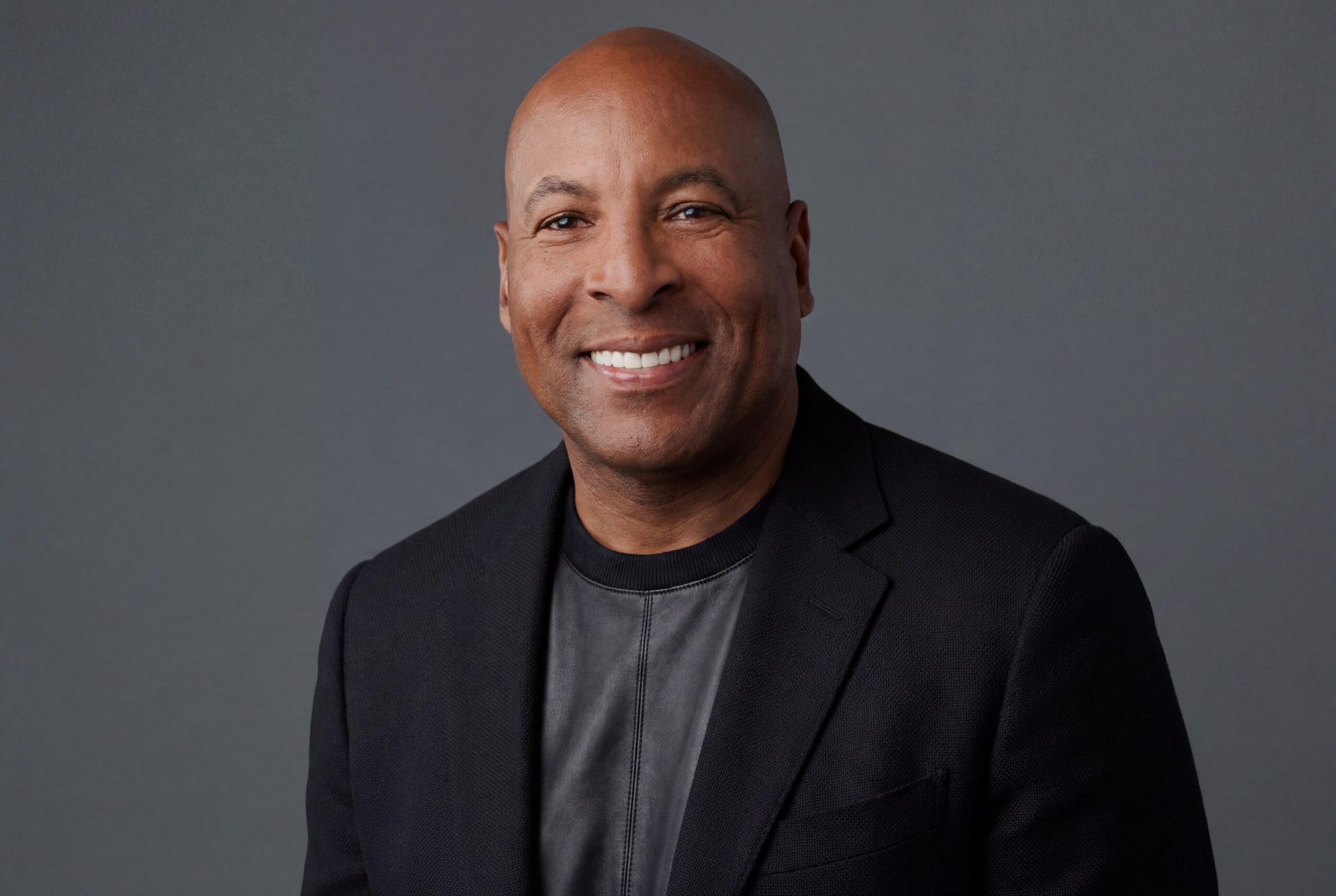
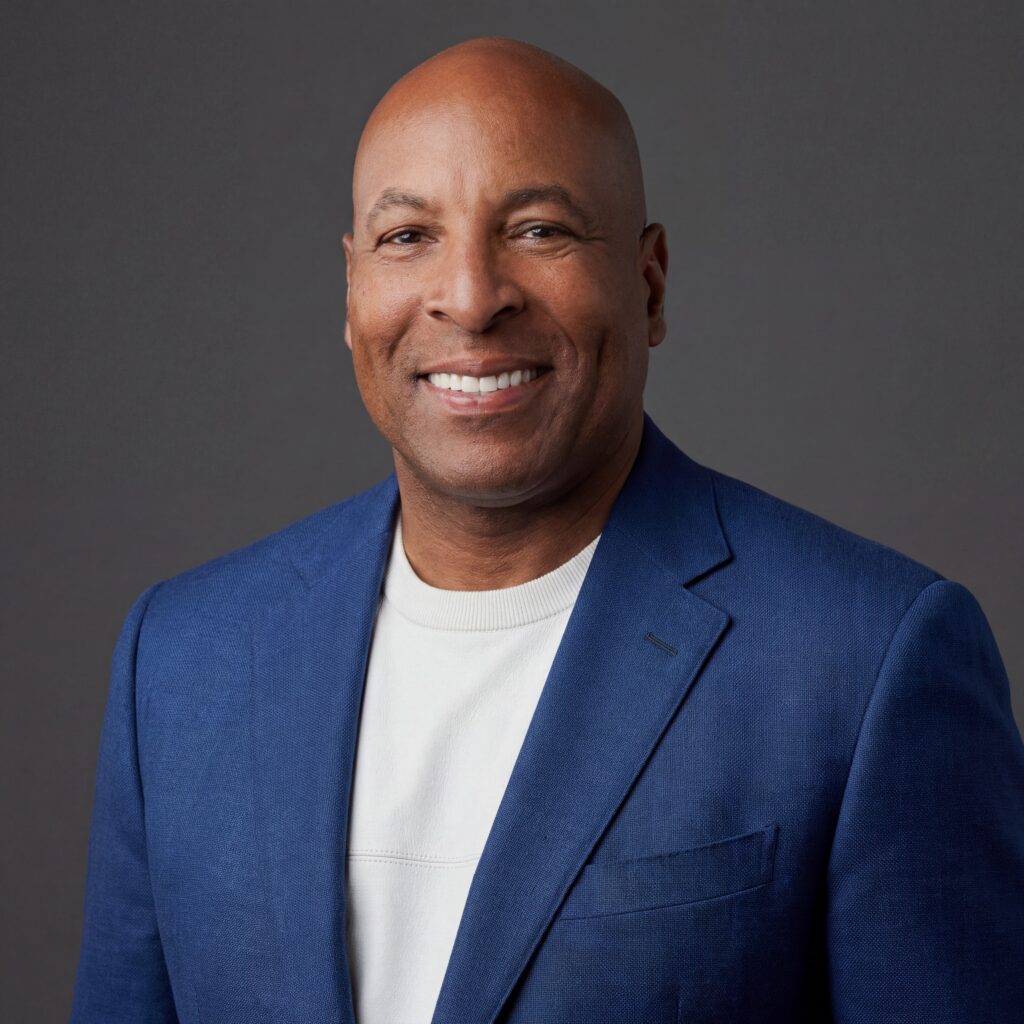
David Grain: The New Black Billionaire Behind a Telecom Empire
The founder of Grain Management built a $2.3 billion fortune by mastering telecommunications finance, acquiring essential digital infrastructure, and owning the systems beneath modern connectivity.
David Grain did not become a billionaire by selling products to millions of social-media followers. He did not build his fortune through professional sports, music catalogs, fashion, film, or a celebrity licensing machine.
He invested in the infrastructure carrying the digital economy.
Cell towers transmit wireless signals. Fiber networks move data between homes, companies, and institutions. Radio spectrum gives communication systems access to valuable frequencies.
Broadband connections determine whether a community can participate fully in education, commerce, health care, entertainment, and modern employment.
Most consumers use these systems without knowing who finances, controls, or profits from them. Grain understood that the invisible layer often holds more durable economic value than the visible application sitting above it.
Forbes added David Grain to its 2026 World’s Billionaires list with an estimated net worth of $2.3 billion, ranking him among 27 Black billionaires worldwide. Forbes identifies private equity as his primary source of wealth and classifies his fortune as self-made.
Calling him “secret” does not mean his career was concealed. Grain has worked inside major financial, telecommunications, corporate, educational, and public-policy institutions for decades.
He remains underrecognized because public culture tends to spotlight visible fame more than infrastructure ownership.
His story presents a different model of Black wealth. It’s based on institutional knowledge, operational credibility, patient capital formation, technical specialization, and control over assets that the information economy cannot function without.
Who Is David Grain?
David J. Grain is the founder and chief executive officer of Grain Management, a private investment firm specializing in global telecommunications infrastructure and technology.
Founded in 2007, the firm invests across broadband, fiber networks, wireless spectrum, towers, satellites, small cells, and related communications services. Grain Management currently reports approximately $12 billion in managed assets and eleven investment vehicles.
Grain’s billionaire status reflects the estimated value of his ownership position in the firm, not $2.3 billion sitting in a personal bank account.
Forbes reported in February 2026 that he owned roughly 64 percent of Grain Management. At that time, Forbes listed the firm at $6.7 billion in assets under management.
Grain Management’s own website now reports approximately $12 billion in managed assets, possibly reflecting a later reporting period or a broader measurement category.
That distinction matters. Managed assets belong to investment funds, portfolio entities, and outside capital partners. They are not personal net worth, annual revenue, or company profit.
Key Intelligence Takeaways
- Grain mastered finance before starting his firm. His career included municipal finance, high-yield finance, mergers and acquisitions, corporate finance, telecommunications management, and a major corporate turnaround.
- His wealth came from specialization. Grain Management concentrated on communications infrastructure rather than pursuing unrelated investments.
- Operating experience strengthened his investment judgment. Grain had already managed a major telecommunications region and led a tower company through bankruptcy before controlling investment funds.
- Institutional credibility came before major capital. Years of transactions, board service, industry relationships, and measured performance helped Grain attract larger commitments.
- His fortune represents infrastructure ownership. Towers, fiber, broadband, and spectrum sit beneath the consumer-facing digital economy.
- Public recognition came after economic control. Grain became wealthy through private markets long before most people knew his name.
Brooklyn, Martha’s Vineyard, and the First Business Education
David Grain was born on May 31, 1962(Gemini), in Brooklyn, New York, to Dora and Walter Grain. He was the youngest of seven children.
His father worked for the U.S. Postal Service in Midtown Manhattan while developing a trucking company during his remaining hours.
That business operated for more than 30 years before Grain’s parents retired to Martha’s Vineyard, where their youngest son attended high school.
Watching his father created an early education in entrepreneurship. Grain saw someone maintain employment while pursuing customers, equipment, opportunities, and business growth outside his assigned workday. He later recalled being present while the company was expanding because he was the youngest child still living at home.
That example matters because it separated entrepreneurship from fantasy. Grain did not first encounter business through a viral success story. He watched his father search for opportunity, accept commercial responsibility, and sustain a company across decades.
Grain attended the College of the Holy Cross, where he studied English and participated in football, rugby, and track. He later earned an MBA from Dartmouth College’s Tuck School of Business in 1989.
An English degree may appear unusual for a future private-equity billionaire. Yet investment leadership requires more than mathematical ability.
Investors must read complicated documents, recognize persuasive language, explain uncertain outcomes, form arguments, and communicate with executives, lenders, regulators, and capital partners.
Numbers establish the economic case. Language helps people understand and support it.
Reginald Lewis and the Expansion of Possibility
When Grain entered Tuck in 1987, he was the only African American man in his class. During that same period, he encountered a newspaper report showing Black financier Reginald F. Lewis beside Michael Milken following Lewis’s $985 million acquisition of Beatrice International Foods.
Lewis’s transaction carried importance beyond its size. Grain could see a Black businessman participating in leveraged finance at a level rarely associated with Black ownership in mainstream corporate America.
Representation has its greatest economic value when it expands a person’s understanding of what can be controlled. Grain already possessed ambition.
Lewis provided documented evidence that Black ownership could enter the highest levels of acquisitions and institutional finance.
Grain was also watching Christopher Williams, a Tuck graduate who later founded his own investment company. Together, these examples raised his expectations without eliminating the preparation required to meet them.
Wall Street Trained the Financier
Grain began his financial career in municipal finance. His interest gradually shifted toward acquisitions and corporate takeovers, leading him to pursue an MBA and enter transaction-oriented finance.
After completing a summer-associate position at Drexel Burnham Lambert, Grain returned after graduating from Tuck. Drexel’s 1990 bankruptcy forced another career transition.
He spent a brief period at Kidder Peabody before joining Morgan Stanley, where he worked across mergers and acquisitions, corporate finance, and high-yield finance during an active period for technology, media, and telecommunications transactions.
High-yield finance involves lending to companies with lower credit ratings in exchange for higher potential returns and greater risk.
Professionals in that field must examine debt capacity, cash flow, collateral, management quality, industry conditions, and the probability that a company can meet its obligations.
Those years gave Grain repeated exposure to the machinery behind large transactions. He learned how acquisitions are financed, how investors price risk, how lenders protect themselves, and how capital structures can strengthen or weaken a company.
Yet financial experience alone would not have been enough. Grain still needed to understand how companies functioned beyond models and presentations.
From Morgan Stanley to Telecommunications Management
While working at Morgan Stanley, Grain studied a prospectus for a cell-tower company and recognized an attractive business model.
Tower owners can lease space on the same physical structure to multiple wireless carriers, allowing additional tenants to increase revenue without requiring a completely new tower for each customer.
Grain attempted to organize a related transaction with AT&T, but the proposal did not proceed after AT&T separated its wireless business.
He later joined AT&T Broadband as senior vice president of its New England region, gaining direct management experience inside a major communications company.
That move represented more than a career change. Grain shifted from advising companies about capital to carrying responsibility for operations.
Bankers study performance from the outside. Executives must manage people, customers, budgets, service problems, competitive pressure, and organizational consequences from the inside.
Serious investment judgment requires both perspectives.
The Global Signal Turnaround
A decisive opportunity arrived when Grain was asked to lead Pinnacle Towers, a Fortress Investment Group portfolio company that was later renamed Global Signal.
The company was emerging from bankruptcy. Grain led its turnaround, guided it through a public offering, and helped develop it into one of the world’s largest independent wireless-tower companies.
Global Signal was later sold, completing the cycle from distressed company to publicly traded enterprise and eventual acquisition.
That experience supplied three things Grain believed every entrepreneur must develop:
1. A financeable investment theme
2. Credibility earned through demonstrated performance
3. Capital capable of supporting the idea
Grain has stated that neglecting any one of those areas places a new venture at a serious disadvantage.
The Global Signal chapter proved he could understand financing, lead an operating company, manage a distressed situation, communicate with institutional investors, enter public markets, and participate in an eventual sale.
By 2007, he possessed more than an interesting theory about communications assets. He possessed a documented record.
Founding Grain Management
Grain established Grain Management in 2007 with a concentrated focus on telecommunications.
That specialization became one of the firm’s defining advantages. Rather than presenting itself as a general investment house willing to purchase almost anything, Grain developed expertise across the connected infrastructure categories supporting digital communication.
The firm describes itself as an asset owner, capital partner, and industry participant working across broadband, fiber, small cells, satellites, spectrum, and towers.
It uses portfolio information, industry relationships, quantitative analysis, econometric methods, and geospatial modeling to identify investment opportunities.
Geospatial modeling examines how location affects value. In telecommunications, geography influences customer density, network coverage, construction costs, competitive conditions, service gaps, and the economic usefulness of a physical asset.
A tower in the wrong area may have limited demand. Fiber connecting essential institutions or growing communities can carry greater strategic importance.
Spectrum covering desirable frequencies and locations can become an exceptionally valuable resource.
Grain Management’s advantage does not come from predicting which social application will attract attention next month. It comes from understanding the infrastructure that many applications, devices, companies, and public institutions must use.
How Grain Management Makes Money
Private investment firms generally raise money from outside institutions and qualified investors, place that capital into funds, purchase or finance assets, improve their economic performance, and seek returns through income, refinancing, or eventual sale.
The management company can earn fees for administering the capital. It may also receive a share of investment profits when performance crosses agreed thresholds.
Founders who retain meaningful equity in a successful investment firm can benefit from the value of the management company, investment participation, and personal holdings.
Grain’s reported ownership of approximately 64 percent of his firm is therefore central to understanding his wealth. Visibility did not make him a billionaire. Equity did.
Grain Management’s reported $12 billion in managed assets reveals the size of the financial environment under its supervision, but the billionaire calculation rests on Forbes’ estimate of Grain’s ownership interests and related assets.
Private-company valuations remain estimates because outside observers do not have the same access available with publicly traded corporations.
Spectrum: The Invisible Property Beneath Wireless Communication
Radio spectrum consists of frequency ranges used to transmit wireless information. Governments regulate and license access because usable frequencies are limited and different services can interfere with each other.
Owning or controlling spectrum rights resembles controlling strategically located digital real estate. The asset is invisible, but its economic function is substantial.
In March 2025, Grain Management announced an agreement involving T-Mobile’s nationwide portfolio of 800 MHz spectrum. The proposed exchange called for Grain to transfer its 600 MHz spectrum licenses and pay T-Mobile $2.9 billion in cash for the 800 MHz licenses.
The Federal Communications Commission approved the transaction on July 2, 2026, while imposing conditions addressing concerns that the frequencies could remain unused.
The FCC shortened proposed construction deadlines, setting interim and final periods of three and eight years rather than the six- and twelve-year periods Grain had requested.
The approved structure also permits potential uses involving utilities, enterprises, terrestrial carriers, satellite systems, and direct-to-device communication.
This transaction shows the level at which Grain now competes. He is not simply purchasing software companies. His firm is participating in multibillion-dollar transfers of regulated national communications capacity.
Controversy, Public Interest, and the Responsibility of Infrastructure Ownership
Infrastructure investing carries responsibilities that ordinary private transactions may not.
Before the FCC approved the T-Mobile arrangement, Senator Ted Cruz questioned whether Grain’s proposed timetable could allow valuable spectrum to remain underused while its market value increased.
Cruz urged the FCC to require enforceable construction obligations, arguing that unused spectrum could affect economic competitiveness and national security.
Grain Management, T-Mobile, and the FCC did not immediately respond to Reuters’ request for comment at the time of that report.
The FCC ultimately approved the transaction but imposed stricter deadlines. That outcome illustrates the tension between private investment rights and public-resource obligations.
Investors seek attractive returns. Regulators must consider competition, access, national security, and whether licensed frequencies are being placed into productive service. Neither side can be understood through slogans.
Grain’s position demands more than financial intelligence. Control over communications infrastructure places private capital inside a public-policy environment.
Leadership Through Measurement and Pattern Recognition
Grain describes his decision process as beginning with a taxonomy, meaning an organized classification of how elements relate to one another. He then emphasizes quantification, repeated observation, and pattern recognition.
After enough repetitions, an experienced leader can identify similarities across transactions that initially appear unrelated.
His hiring philosophy also values varied backgrounds and forms of expertise. Grain has said that broader perspectives help investment teams identify opportunities and recognize risk.
He presents that approach as a commercial discipline rather than a symbolic gesture.
His leadership record now extends across corporate and civic institutions.
Grain serves in roles involving Dell Technologies, New Fortress Energy, Southern Company, the Brookings Institution, Dartmouth College, the National Museum of African American History and Culture, and the Martha’s Vineyard Museum.
He was appointed to the National Infrastructure Advisory Council in 2011 and again in 2024.
Why David Grain’s Billionaire Status Matters Culturally
Black business coverage often concentrates on entertainment, sports, fashion, beauty, and consumer products because those industries produce recognizable personalities.
Grain’s fortune reveals another route.
His economic position developed through finance, distressed-company leadership, telecommunications management, institutional fundraising, technical specialization, and private ownership.
His wealth sits beneath everyday digital behavior rather than in front of it.
Every video stream, business call, mobile payment, cloud application, online class, telehealth session, and artificial-intelligence platform depends on physical and regulated infrastructure.
Culture may create demand at the surface, but infrastructure owners collect value from the systems supporting that demand.
That is the central PrimalMogul AI interpretation: Grain did not chase attention inside the digital economy. He acquired positions beneath the digital economy.
For Black entrepreneurs, the lesson is not that everyone should start a telecommunications fund. The lesson is to examine who owns the essential layer of any industry.
Restaurants depend on property, payment processing, supply distribution, and customer data.
Music depends on intellectual property, publishing, distribution, touring infrastructure, and platforms.
Artificial intelligence depends on computing capacity, data centers, chips, energy, networks, and proprietary information.
The person receiving the most attention may not control the highest-value position.
The Grain Capital Sequence
David Grain’s career can be interpreted through a five-stage model.
1. Develop a Financeable Theme
An idea becomes financeable when credible investors can understand the market, asset, risk, economic mechanism, and return potential.
2. Earn Credibility Before Requesting Major Capital
Grain accumulated transaction experience, management responsibility, and turnaround results before establishing his firm.
3. Concentrate Where Knowledge Compounds
Specialization allowed industry relationships, performance data, regulatory knowledge, and transaction experience to reinforce one another.
4. Retain Meaningful Ownership
Compensation can create wealth. Equity can create control and participation in long-term enterprise value.
5. Move Beneath the Consumer Layer
Durable economic positions often exist in infrastructure, distribution, licensing, financing, data, and other systems supporting visible products.
Common Misconceptions About David Grain
“He owns $12 billion personally.”
Grain Management reports approximately $12 billion in managed assets. That figure is not Grain’s personal fortune. Forbes estimates his net worth at $2.3 billion.
“He became wealthy suddenly.”
His 2026 Forbes debut followed decades in finance, telecommunications management, corporate restructuring, fund development, and asset ownership.
“He simply invested in technology companies.”
His firm concentrates on communications infrastructure and related services, including physical assets and regulated spectrum.
“Private equity is only financial modeling.”
Grain’s path shows the value of combining financing knowledge with direct company leadership and industry specialization.
“Public fame proves economic authority.”
Grain became a billionaire while remaining unfamiliar to much of the public. Ownership and recognition are separate forms of power.
What This Means for the PrimalMogul AI Reader
- Study the layer beneath the product. Identify who controls financing, infrastructure, distribution, data, licenses, or property.
- Build credibility before pursuing large commitments. Serious capital responds to evidence, preparation, and demonstrated judgment.
- Choose a defined commercial domain. Concentrated expertise can improve opportunity recognition and risk assessment.
- Distinguish managed money from owned money. Revenue, fund size, company value, and personal net worth measure different things.
- Treat regulation as part of the business model. Industries involving finance, communications, health care, energy, or public infrastructure cannot be understood through sales alone.
- Use technology to strengthen judgment. Data systems and AI should support analysis after the business question has been correctly diagnosed.
Grain’s career teaches that economic authority is often constructed quietly, through preparation most people never see and assets most consumers never consider.
The David Grain Action Plan
1. Map your industry’s economic chain. List the customer-facing product, infrastructure, distributors, financiers, data owners, and regulatory authorities.
2. Choose one specialized position. Identify the area where knowledge, relationships, and documented performance can accumulate.
3. Create a financeable business thesis. Explain the market need, revenue mechanism, risk, capital requirement, and expected return.
4. Develop proof. Complete smaller transactions, customer engagements, projects, or partnerships that establish credibility.
5. Protect ownership. Understand equity, voting authority, intellectual property, contracts, and dilution before accepting capital.
6. Measure what matters. Track cash flow, customer concentration, debt obligations, asset productivity, and risk exposure.
7. Wait for the right transaction. Patience is not inactivity when it is used for preparation.
The Real Meaning of David Grain’s Rise
David Grain’s 2026 billionaire recognition did not create his economic position. It announced a position built over decades.
His career moved from a Brooklyn household where a postal worker developed a trucking company, through elite financial institutions, corporate management, bankruptcy restructuring, public markets, private investment funds, and nationally significant communications transactions.
The strongest lesson is not the $2.3 billion estimate.
The lesson is sequence.
Grain studied capital before controlling it. He managed companies before acquiring them through investment vehicles. David developed credibility before asking institutions to trust him with major commitments.
He concentrated on infrastructure while much of the market focused on consumer-facing technology.
Public culture usually celebrates what it can see. Serious ownership frequently sits beneath the surface.
Mogul Frequently Asked Questions
What is David Grain’s net worth in 2026?
Forbes estimated David Grain’s net worth at $2.3 billion and included him on its 2026 World’s Billionaires list. Private-company wealth estimates can change as firm valuations, holdings, debt, and market conditions change.
How did David Grain become a billionaire?
His fortune primarily comes from his ownership of Grain Management, the telecommunications-focused private investment firm he founded in 2007. Forbes reported that he owned approximately 64 percent of the firm.
What does Grain Management invest in?
The firm invests in broadband, fiber networks, communications towers, wireless spectrum, satellites, small cells, and technology or service companies connected to telecommunications infrastructure.
How much money does Grain Management manage?
Grain Management’s website reports approximately $12 billion in managed assets. This amount should not be confused with David Grain’s personal net worth or the firm’s annual revenue.
Where did David Grain go to college?
He earned a bachelor’s degree in English from the College of the Holy Cross and an MBA from Dartmouth College’s Tuck School of Business.
What company did David Grain lead before founding Grain Management?
He led Pinnacle Towers, later renamed Global Signal, through a bankruptcy turnaround and public offering before the company was eventually sold.
Why is David Grain not as famous as other Black billionaires?
His career developed in private finance and telecommunications infrastructure rather than public entertainment or consumer branding. His wealth is economically significant but less visible to everyday consumers.
Is David Grain the only new Black billionaire in 2026?
No. Forbes’ 2026 coverage identified 27 Black billionaires worldwide and included other recently recognized fortunes. Grain stands out because his wealth comes from private investment ownership focused on communications infrastructure.
Enter the PrimalMogul AI BoardRoom
David Grain’s career demonstrates why important decisions require more than information.
Founders need disciplined analysis across capital, leadership, technology, market position, compliance, and ownership.
PrimalMogul BoardRoom is the strongest membership match for established founders facing those higher-stakes decisions.
- Executive AI Council: Examine major decisions through the perspectives of Chairman AI, CEO AI, CFO AI, CMO AI, CTO AI, and Chief Compliance AI.
- Chairman AI: Work through leadership responsibility, risk, negotiation, and long-term business direction.
- CFO AI: Review financial structure, capital requirements, cash flow questions, and funding preparation.
- Mogul Vault: Study business frameworks, case studies, templates, and educational resources built for practical application.
BoardRoom membership includes the Executive AI Council, BoardRoom Command Center, advanced funding tools, approximately one million AI words, and approximately 500 image generations.
Core Builds. Elite Expands. BoardRoom Commands