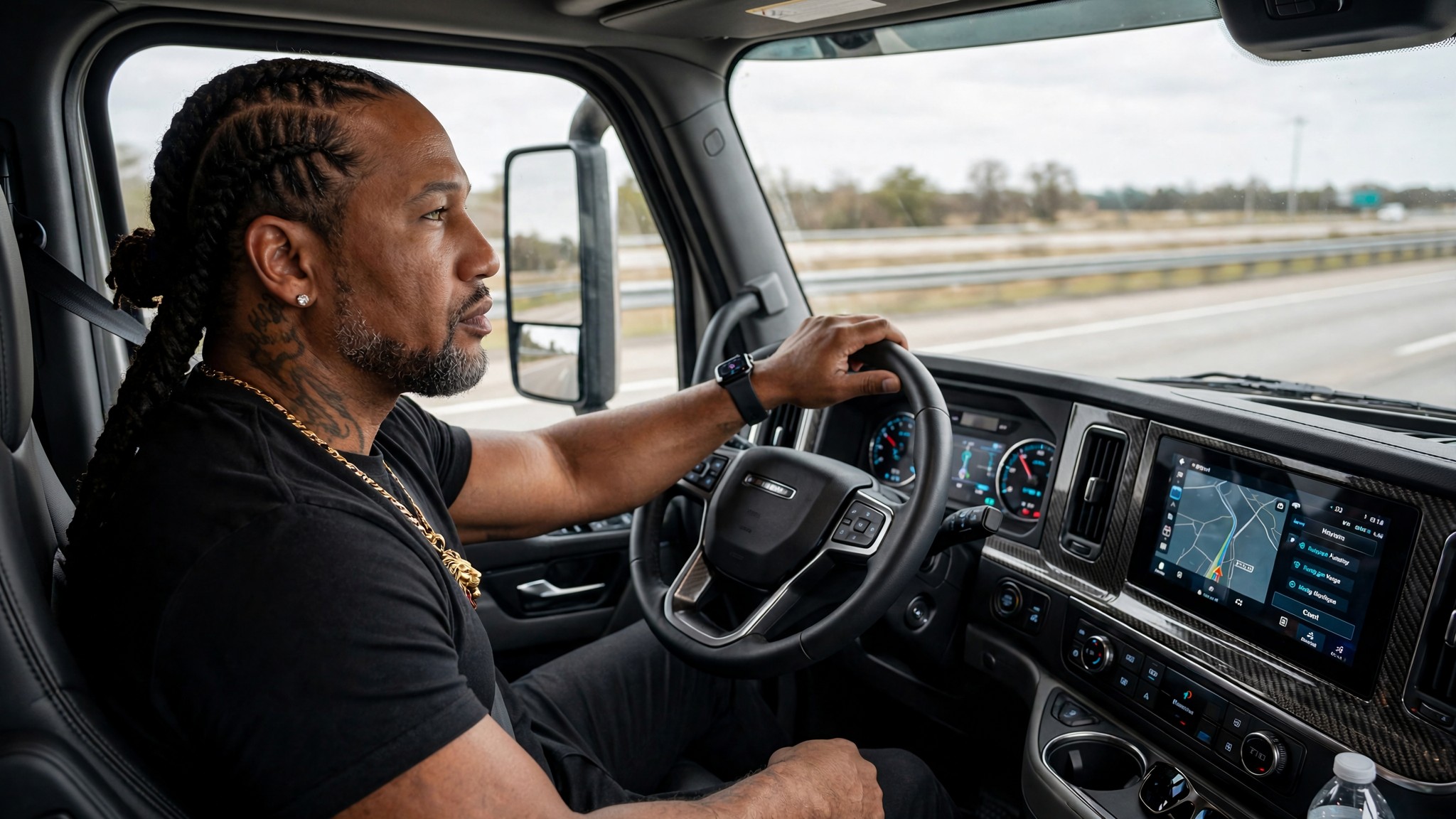

The 2027 AI-Powered Trucking Empire: Logistics, Automation, and High-Margin Fleet Operations
America moves on trucks. Groceries, building materials, medicine, and nearly every package you’ve ever ordered spent part of its journey on a highway. That constant demand makes trucking look like one of the most reliable businesses an entrepreneur can enter.
Thousands of people act on that belief every year. They buy a truck, apply for authority, and start hauling.
Many of them don’t make it. The problem usually isn’t effort. It’s sequence. They launch a truck instead of a company, and trucking punishes that mistake quickly. Thin margins, insurance costs, compliance demands, and driver turnover can drain an unprepared carrier in months.
This 2027 AI-Powered Trucking Empire blueprint offers a sophisticated, boardroom-level framework for building a resilient logistics business. It covers essential corporate structuring, regulatory compliance, strategic lane management, and AI-driven operational optimization for serious industry professionals.
| Layer | What It Covers |
|---|---|
| Foundation | Entity structure, capital, and credit |
| Compliance | Authority, registration, insurance, and policies |
| People | Driver-centric fleet, training pipeline, and owner-operator leasing |
| Intelligence | AI dispatch, dashboards, and fuel optimization |
| Profit | Lane selection and long-term shipper relationships |
The 2027 Freight Reality
Why Many New Carriers Don’t Survive Year One
Freight markets move in cycles. When demand is strong, rates climb and new carriers flood in. When demand cools, rates drop, and carriers without reserves get squeezed between falling revenue and fixed costs that never pause. Truck payments, insurance premiums, and fuel bills arrive whether loads are paying well or not.
The most common failure points are predictable: launching without enough cash reserves, chasing high-paying loads with long empty miles, underestimating insurance costs, and losing drivers faster than they can be replaced. Each one is survivable on its own. Together, they’re fatal.
The opportunity is just as real. Technology now gives small fleets the kind of visibility that only large carriers once had: live tracking, profit analysis per load, and data-driven dispatch. A disciplined small carrier with clean systems can compete for quality freight in ways that weren’t possible a decade ago.
- Freight rates rise and fall in cycles.
- Fixed costs continue in every market condition.
- Most failures trace back to reserves, lanes, insurance, or turnover.
- Technology now levels the field for disciplined small fleets.
Key Executive Tip: Plan for six months of operating reserves before hauling your first load. Reserves turn a slow freight season into an inconvenience instead of a crisis.
Build the Corporate Foundation
Holding Company, Operating Carrier, and Equipment Entity
Serious carriers separate risk from assets. A common structure uses three entities. The holding company owns the brand and accumulated reserves.
The operating carrier holds the authority, employs or contracts drivers, and carries the daily risk of the road. An equipment LLC owns the trucks and trailers and leases them to the carrier under written agreements.
The logic is simple. Trucking carries real accident and liability exposure. Keeping trucks and reserves outside the entity that operates on the highway adds a layer of separation. Though that protection depends on proper formation, separate accounts, fair-market leases, and adequate insurance. Your attorney and CPA should review the business structure before you form anything.
Capital typically comes from several sources: equipment financing for trucks, business credit lines for working capital, and freight factoring, where you sell invoices at a discount for faster cash.
Factoring smooths cash flow when brokers pay in 30 to 60 days, but the fees reduce margin, so it should support growth rather than replace planning. Expect most early financing to require a personal guarantee.
- Separate brand, operations, and equipment into distinct entities.
- Lease trucks from the equipment LLC under written agreements.
- Use factoring for cash flow, while tracking its true cost.
- Plan entity elections, depreciation, and expenses with a CPA.
- Read every personal guarantee before signing.
Key Executive Tip: Keep trucks out of the entity that carries the operating risk. The company that drives on the highway should own as little as possible.
Authority, Licensing, and Registration
The Compliance Sequence Before the First Load
Interstate carriers need a USDOT number and federal operating authority.
You’ll also file a BOC-3 to designate process agents, register for Unified Carrier Registration, obtain apportioned plates through the International Registration Plan, set up IFTA fuel tax reporting, and file Form 2290 for heavy vehicle use tax on qualifying trucks.
State permits vary, and California carriers face additional emissions and equipment rules from the California Air Resources Board.
The registration system itself is changing. FMCSA has proposed no longer assigning MC numbers, which would make the USDOT number the sole identifier for all registrants.
The agency has also stated this change remains under consideration, will be open for public comment through a proposed rulemaking, and won’t take effect with the first release of the new registration system.
Some websites claim MC numbers are already gone. Verify the current status directly on FMCSA.gov before you apply.
New carriers also enter a monitoring period that includes a safety audit early in operations. Auditors review driver files, hours-of-service records, drug and alcohol testing, maintenance records, and insurance.
Carriers that build their compliance system from day one walk into that audit prepared.
- Obtain your USDOT number and operating authority.
- File BOC-3, UCR, IRP, IFTA, and Form 2290.
- Check state and California-specific requirements.
- Verify current MC number rules on FMCSA.gov.
- Prepare for the new entrant safety audit immediately.
Key Executive Tip: Build your compliance binder before you apply, not after the auditor calls. Treat every record as if it will be reviewed, because eventually it will be.
Insurance Protocols
Coverage That Keeps One Accident From Ending the Company
Insurance is often a new carrier’s largest expense after the truck itself, and it can arrive as a shock.
Federal rules require interstate carriers of general freight to carry at least $750,000 in public liability coverage, and many brokers and shippers require more. Cargo coverage, physical damage coverage for your equipment, and general liability round out the core package.
If you lease owner-operators, coverage questions multiply. Non-trucking liability and occupational accident coverage often come into play, and your leases must spell out who carries what.
Premiums respond to risk. Driver experience, safety records, equipment quality, and safety technology all affect your rates. Dash cameras, collision mitigation systems, and strong driver screening can help your insurance story over time.
- Meet federal minimum liability, and expect broker requirements above it.
- Carry cargo, physical damage, and general liability coverage.
- Define coverage responsibilities in owner-operator leases.
- Invest in safety technology and driver quality.
Key Executive Tip: Get insurance quotes before buying trucks or hiring drivers. Premiums can change which equipment and driver profiles actually make financial sense.
Bylaws, Policies, and Accountability
The Professional Structure Behind a Serious Fleet
Professional carriers run on written rules. Your operating agreement or bylaws should define ownership, decision rights, and how capital gets added when the business needs it.
Beyond the entity documents, every fleet needs a written safety policy and a driver handbook covering expectations, discipline, equipment care, and communication.
Federal rules require driver qualification files, drug and alcohol testing programs, Clearinghouse queries, and hours-of-service compliance through electronic logging devices.
Build a structured onboarding process: application, background and record checks, road test, orientation, and signed acknowledgment of company policies. Consistency here protects you legally and sets the culture from day one.
Accountability keeps the system alive. Monthly driver scorecards tracking safety events, on-time delivery, fuel efficiency, and equipment condition give drivers clear standards and give you objective data for recognition, bonuses, and coaching.
- Document ownership and decision rights in your operating agreement.
- Publish a safety policy and driver handbook.
- Maintain complete driver qualification and testing records.
- Onboard every driver through the same structured process.
- Score performance monthly and reward the best results.
Key Executive Tip: What gets measured gets respected. Publish driver scorecards monthly and recognize top performers publicly.
Fleet Mastery
Driver-Centric Trucks That Reduce Churn
Driver turnover is one of the most expensive problems in trucking. Every departure means recruiting costs, training time, and trucks sitting idle. Equipment plays a bigger role in retention than many owners realize.
New trucks offer warranties, reliability, and modern safety systems at a higher price. Quality used trucks lower the entry cost but carry more breakdown risk.
Compare total cost of ownership, including financing, maintenance, fuel economy, and downtime, rather than sticker price alone.
Drivers live in their trucks. Comfortable sleepers, reliable climate control, idle-reduction systems, ergonomic seating, and dependable connectivity make that life sustainable.
Safety technology such as collision mitigation, lane assistance, and dash cameras protects drivers and the company at the same time.
Preventive maintenance schedules, supported by telematics alerts, keep trucks earning instead of waiting in the shop.
- Compare total cost of ownership, not purchase price.
- Prioritize sleeper comfort and climate control.
- Equip trucks with modern safety technology.
- Run preventive maintenance on a fixed schedule.
- Treat driver comfort as a retention investment.
Key Executive Tip: Invite your best drivers to help choose specifications on new trucks. People stay longer with equipment they helped select.
The Owner-Operator Lease Program, Done Right
Grow Capacity Without Renting Out Your Authority
Many new carriers hear about a shortcut: let independent truckers run under your DOT authority for a monthly fee. That arrangement, often called authority renting, can leave the carrier legally exposed for operations it doesn’t actually control.
The legitimate model is leasing owner-operators onto your authority under federal Truth-in-Leasing rules. The written lease must address compensation, chargebacks, escrow funds, and insurance responsibilities.
Your company remains responsible for safety compliance, which means leased drivers go through your qualification, testing, and accountability systems like any other driver.
California entrepreneurs face an additional layer. The state’s AB5 worker classification law has complicated how California carriers treat drivers as independent contractors. Any in-state owner-operator program needs legal review before launch.
- Never rent out your authority for a flat fee.
- Lease owner-operators under written Truth-in-Leasing agreements.
- Keep leased drivers inside your full compliance system.
- Get legal review for California classification rules.
Key Executive Tip: Win owner-operators with transparency: clear settlement statements, fast pay, and honest terms. Reputation spreads fast among independent drivers.
The Talent Pipeline: Your In-House Mini Trucking School
Train the Drivers You Can’t Find
Recruiting experienced drivers is expensive and competitive. Training your own creates a steady pipeline of drivers who learn your culture and standards from day one.
Federal Entry-Level Driver Training rules require training providers to meet set standards and register in FMCSA’s Training Provider Registry.
You can build a registered program yourself or partner with an established trucking school while handling recruitment, mentorship, and placement in-house.
Many fleets cover tuition in exchange for a service commitment, but some states, including California, have moved to restrict training repayment agreements, so those terms need legal review.
Pair every new driver with a veteran mentor for their first weeks on the road.
Recruit through workforce development programs, community organizations, and veteran transition programs, where motivated candidates are looking for stable careers.
- Register your program or partner with a registered school.
- Get legal review before using tuition repayment agreements.
- Pair new drivers with experienced mentors.
- Recruit through workforce, community, and veteran programs.
Key Executive Tip: A driver trained inside your culture is often worth more than three recruited from a competitor. Training is a retention strategy disguised as a recruiting expense.
The AI Operations Command Center
Dispatch, Dashboards, and Fuel Intelligence
Technology is where a small fleet gains real ground. AI-assisted dispatch tools analyze available loads against your trucks’ locations, hours available, and costs.
They highlight loads with the strongest rate per mile after accounting for empty miles, and they can help screen brokers by credit and payment history.
A fleet dashboard ties operations together: live truck locations, driver hours remaining, maintenance alerts, and profit per load. Fuel intelligence adds another layer.
Route-based fuel planning, fuel card discounts, and idle-time tracking reduce one of your largest variable costs, while automatic mileage data simplifies IFTA reporting.
Back-office automation completes the system. Document capture tools process bills of lading, generate invoices, and connect with factoring partners so cash moves faster.
Human judgment still governs. AI recommends, dispatchers decide, and ownership reviews the numbers weekly. A tool that optimizes for one metric can miss context a seasoned dispatcher sees instantly.
- Use AI to rank loads by true profit per mile.
- Screen brokers by credit and payment history.
- Track trucks, hours, and maintenance on one dashboard.
- Plan fuel stops and monitor idle time.
- Automate document capture and invoicing.
- Keep final dispatch decisions with experienced people.
Key Executive Tip: Track profit per mile, not revenue per load. A high-paying load with a long empty return trip can quietly lose money.
Strategic Profitability
High-Margin Lanes and Long-Term Shipper Relationships
Profit in trucking is decided by where your trucks run and who you haul for. Spot market freight from load boards offers flexibility but volatile rates. Contract freight and dedicated lanes offer stability, often at lower peaks but steadier averages.
Specialization can strengthen margins. Refrigerated, flatbed, expedited, and regional niches each require specific equipment and expertise, which limits competition.
Strong lanes share a few traits: balanced freight in both directions, minimal empty miles, reliable fuel and parking access, and shippers with consistent volume.
Relationships compound over time. Most new carriers start on load boards, graduate to repeat brokers, and eventually earn direct shipper contracts.
The path is built on reliability: on-time delivery, proactive communication when problems arise, and clean paperwork every time.
- Balance spot freight with contract and dedicated lanes.
- Consider specializing to reduce competition.
- Choose lanes with freight in both directions.
- Build from load boards to repeat brokers to direct shippers.
Key Executive Tip: One dependable direct shipper can stabilize a small fleet more than a hundred spot loads. Reliability is the sales strategy.
Mogul Frequently Asked Questions
How much does it cost to start a trucking company?
Costs vary widely with equipment, insurance, and location. Budget for trucks, insurance down payments, registrations, and several months of reserves.
Do I still need an MC number in 2027?
FMCSA has proposed eliminating MC numbers, but verify the current rule on FMCSA.gov before applying.
Can I start with one truck?
Yes. Many carriers start with one truck and grow, but reserves and lane strategy matter even more at that size.
Can I lease owner-operators in California?
AB5 complicates contractor classification. Get legal review before launching an owner-operator program in California.
How do AI dispatch tools help?
They analyze loads, costs, and driver hours to recommend profitable options, while dispatchers make final decisions.
What insurance does a new carrier need?
At minimum, federally required liability coverage plus cargo and physical damage coverage, with additional coverage depending on your operations.
Power Conclusion
Trucks don’t build empires. Systems do. Carriers that last separate their assets from their risks, build compliance before their first load, insure for reality instead of hope, and treat drivers as the center of the business.
They use AI to see profit clearly, keep experienced people in charge of decisions, and grow through reliable relationships instead of chasing every high-paying load.
The road rewards discipline and punishes shortcuts. Build the company first, then let the trucks do what a well-run company makes possible.
Run Your Fleet Like a Boardroom With PrimalMogul AI
Trucking punishes guesswork. One bad lane, one insurance surprise, or one compliance gap can erase months of work. The PrimalMogul AI BoardRoom puts a private executive council of AI advisors behind every major decision you make as a logistics entrepreneur.
Our CFO stress-tests finances, the Compliance advisor manages filings and audits, the CTO architects AI dispatch and dashboards, and the CMO builds your shipper pitch. The Chairman synthesizes these into a unified business strategy.
- Model profit per mile and lane economics before you commit to equipment.
- Build your compliance binder and driver accountability system step by step.
- Prepare focused questions for your CPA, attorney, and insurance agent.
PrimalMogul AI provides business education and AI-assisted decision support. It does not provide legal, tax, insurance, or regulatory advice. Verify all trucking requirements with FMCSA, your state agencies, and licensed professionals.
Sources to Cite and Link:
- FMCSA.gov: USDOT number and operating authority registration; MC number and USDOT suffix updates
- FMCSA.gov: Insurance and financial responsibility requirements
- FMCSA.gov: Truth-in-Leasing regulations for owner-operator leases
- FMCSA.gov: Entry-Level Driver Training and the Training Provider Registry
- FMCSA.gov: New Entrant Safety Assurance Program and the Drug and Alcohol Clearinghouse
- IRS.gov: Form 2290, Heavy Highway Vehicle Use Tax
- UCR.gov and IFTA.org: Registration and fuel tax requirements
- CARB (ww2.arb.ca.gov): California truck emissions and idling rules
- California Labor and Workforce Development Agency: AB5 worker classification guidance