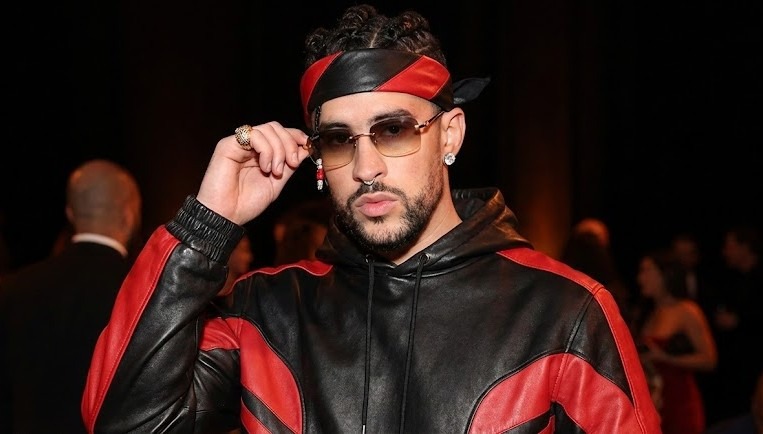
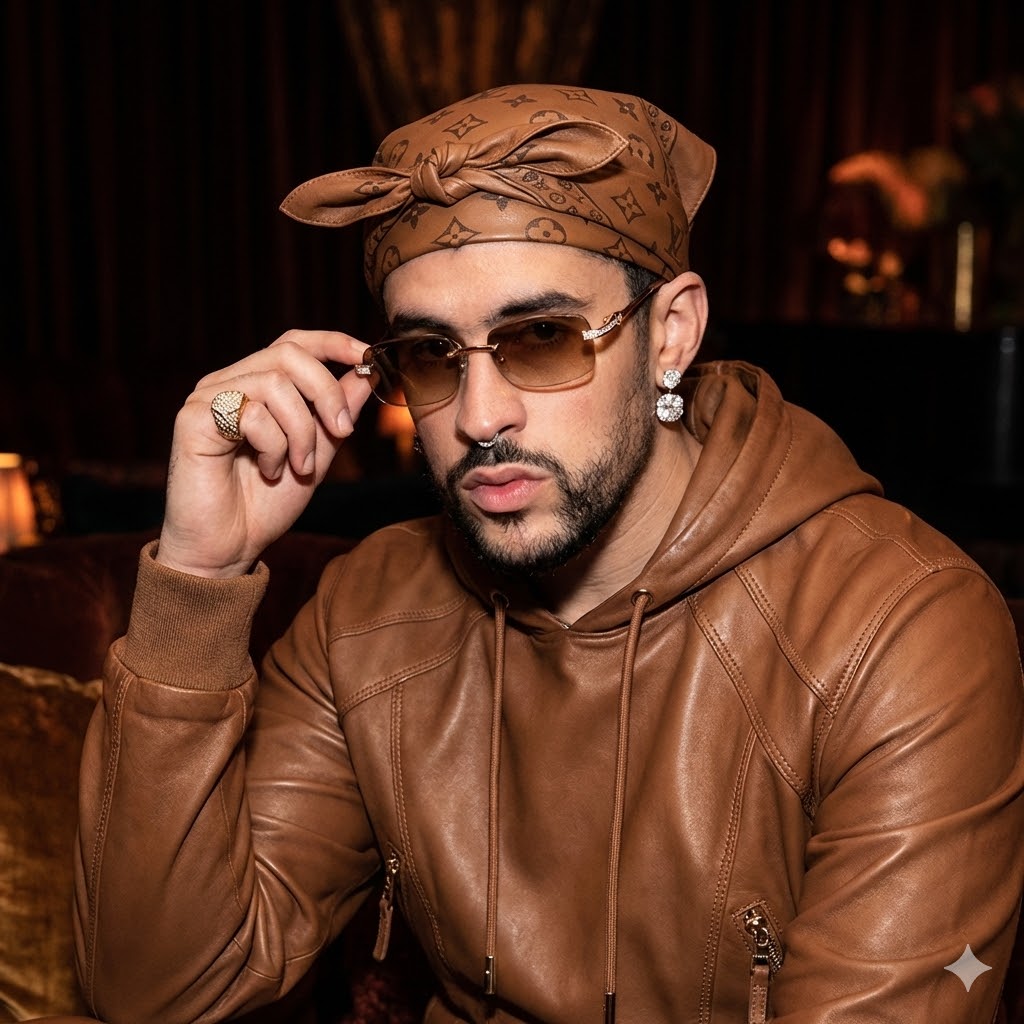
The Rise of Bad Bunny: Latin Music Icon, Super Bowl Headliner, Global Business Powerhouse
Executive Summary: Bad Bunny’s Business Empire and Latin Music Dominance
How Bad Bunny became a Latin Music Icon and Superbowl Headliner. Bad Bunny (real name Benito Antonio Martínez Ocasio) is a Puerto Rican reggaeton and Latin trap artist who transcended music to become a global cultural and economic force.
Born March 10, 1994, in Bayamón and raised in Vega Baja, Puerto Rico, he started singing in a church choir, worked at a supermarket, and uploaded songs to SoundCloud before breaking out commercially.
He remains one of the most streamed and commercially successful artists in the world, with massive revenue from streaming, touring, residencies, and brand collaborations.
In 2025, Forbes ranked him among the highest-paid musicians globally, with around $66 million in earnings: including nearly $30 million from 19.8 billion Spotify streams and about $40 million from a residency in Puerto Rico that had significant economic impact on the island.
Bad Bunny made history by headlining the 2026 Super Bowl LX Halftime Show: the first solo Latino artist to do so and the first to perform almost entirely in Spanish.
Early Life, Upbringing, and Education
Benito Martínez was born and raised in Puerto Rico. His parents exposed him early to music, and he participated in his church choir until age 13.
After high school, he studied audiovisual communications at the University of Puerto Rico at Arecibo. Intending to become a radio host, while working part-time as a grocery store bagger and cashier to support himself. Eventually he left university to pursue music full-time.
His stage name comes from a childhood image of him wearing a bunny costume, representing a spirit of individualism that would later define his artistic identity.
Musical Catalog and Career Milestones
Bad Bunny’s career is defined by chart-breaking releases and genre leadership. Key aspects include:
Albums & Hits
X 100PRE (debut) and later groundbreaking albums like YHLQMDLG, El Último Tour Del Mundo, Un Verano Sin Ti, and Debí Tirar Más Fotos. The last of which became the first all-Spanish album to win Album of the Year at the Grammy Awards.
Streaming & Records
He has topped global streaming charts multiple times and was Spotify’s most streamed artist for several consecutive years.
Touring & Live Shows
Massive global tours and residencies: In 2025, he staged a 31-show residency in San Juan (“No Me Quiero Ir De Aquí”). Which drew half a million fans and boosted Puerto Rico’s economy significantly. His world tour “Debí Tirar Más Fotos” sold over 2.6 million tickets early on, with extraordinary economic spillover in major markets like Mexico City.
Awards & Recognition
Multiple Grammys and Latin Grammys, including major category wins, cementing his position as a genre-defining artist.
Business Ownership and Private Investments
Beyond music, Bad Bunny has diversified his enterprise across industries:
Brand Collaborations
Endorsement deals with major global brands like Adidas (sneaker lines), Pepsi, Corona, Cheetos, and Calvin Klein.
Fashion Influence
His personal style disrupted norms, blending streetwear, gender-fluid fashion, and cultural symbols. High-profile fashion appearances and collaborations amplify brand positioning beyond music alone.
Acting & Entertainment
Roles in major films such as Bullet Train and Happy Gilmore 2, expanding his presence into mainstream narrative media.
Sports & Hospitality
Co-ownership of a Puerto Rican basketball team (Los Cangrejeros de Santurce) since 2021 and investments in restaurants and nightlife ventures.
Real Estate
High-value real estate purchases in Los Angeles, reinforcing long-term asset diversification.
Philanthropy
Through the Good Bunny Foundation, he supports youth empowerment, sports infrastructure, arts, and community development in Puerto Rico.
Leadership Style and Cultural Positioning
Bad Bunny’s leadership is marked by intentional identity, cultural pride, and boundary-pushing. He:
- Places culture before conformity, using his platform to assert Puerto Rican identity, language, and heritage on global stages like the Super Bowl.
- Challenges traditional norms: including gender, style, and industry expectations: while remaining authentic to his roots.
- Integrates activism subtly into mainstream cultural contexts, such as using his halftime performance to advocate for inclusion and push back against xenophobic narratives.
His approach blends artistic integrity with strategic positioning, making him both a cultural and economic influencer.
Financial and Commercial Scale
Net Worth & Earnings
- Forbes reported earnings of roughly $66 million in 2025, a number fueled by streaming, residencies, tours, and brand deals.
- Celebrity Net Worth estimates his total net worth at approximately $100 million in 2026.
Super Bowl Compensation
Bad Bunny did not receive significant direct pay for headlining the 2026 Super Bowl halftime show. The NFL’s model does not pay artists performance fees, beyond a union-scale minimum wage; production costs are covered by sponsors like Apple Music.
Exposure and downstream revenue (streaming spikes, record sales, brand activation) are the actual commercial payoff.
This reflects a broader strategy: taking high-visibility platforms as cultural currency, turning attention into streaming growth and brand expansion rather than direct compensation.
Connections With Jay-Z and Roc Nation
The announcement of Bad Bunny as the 2026 Super Bowl headliner came via the NFL in partnership with Apple Music and Jay-Z’s Roc Nation. Jay-Z backed the choice as a strategic milestone for Latino representation and cultural impact in one of global entertainment’s biggest traditions.
While not signed to Roc Nation as a recording artist, Bad Bunny’s Super Bowl performance under the producer’s umbrella marks a significant institutional alliance, reinforcing how influential partnerships can expand an artist’s platform beyond traditional music channels.
Latin America Reach and Untapped Cultural Markets
Bad Bunny’s influence extends deeply into Latin America. He:
- Dominated global streams and charts across Spanish-speaking markets.
- Increased the international footprint of Latin trap and reggaeton, contributing to a boom in revenue that saw Latin music account for billions in U.S. revenue by 2024.
- Spearheaded tours that sell millions of tickets and generate broad cultural economic activity, including tourism boosts and local business engagement.
This demonstrates that Latin markets are not niche segments but core drivers of global music economy growth: a landscape ripe for structural business models that respect cultural specificity while pursuing scale.
Strategic Lessons for Primal Mogul Members
1. Identity as Business Architecture
Bad Bunny’s career is built on a coherent, authentic identity: not just a persona but a cultural narrative that resonates worldwide. Primal Mogul members should focus first on brand identity before product or monetization.
2. Leverage Culture to Expand Markets
His success shows that deeply rooted cultural expression can unlock new audiences. This is especially relevant for Latin America’s untapped cultural business potential, spanning music, fashion, tech, and media.
3. Institutional Visibility vs Direct Compensation
Headlining the Super Bowl without a large paycheck illustrates a strategic use of mega-platform exposure to drive indirect earnings: streaming, brand partnerships, tours that often exceed direct fees. Members should think in terms of business ecosystem leverage, not immediate payments.
4. Multi-sector Diversification
Bad Bunny’s ventures into fashion, acting, sports, philanthropy, and hospitality illustrate a portfolio approach to cultural enterprise. Diversification anchored in identity and community enhances resilience and influence.
5. Community & Empowerment as Value Creation
His philanthropic work and cultural advocacy produce tangible economic benefits for his home region. This shows that social impact can be a business multiplier, not just a brand add-on.
Frequently Asked Questions
Was the Super Bowl about money?
No. At Bad Bunny’s level, the Super Bowl is platform leverage. The real value is global visibility, long-term streaming lift, touring demand, brand equity, and deal power. Attention compounds first. Cash follows later.
Is independence compatible with institutions?
Yes, when authorship stays intact. Bad Bunny did not avoid institutions. He entered them after securing identity, audience loyalty, and creative control. Independence means choosing alignment from strength, not isolation.
Can culture scale globally without translation?
Yes, when identity is clear. Bad Bunny showed that specificity travels farther than neutrality. Confidence, emotion, talent and coherence translate across borders. Discipline in distribution matters more than language.
Why did the Super Bowl matter strategically for his empire?
It positioned Latin culture at the center of global entertainment. The performance reinforced Bad Bunny as a cultural authority, increasing leverage across music, touring, fashion, and brand partnerships.
How does Bad Bunny turn music into a business system?
He treats releases as assets, not moments. Albums, tours, visuals, and collaborations are structured to reinforce each other, allowing attention to convert into long-term revenue instead of short spikes.
What role does control play in his success?
Control protects value. By maintaining authorship over sound, image, and timing, Bad Bunny prevents dilution and keeps institutions working as amplifiers rather than decision-makers.
What can entrepreneurs learn from Bad Bunny’s model?
Build identity first. Structure output. Listen to signals. Compound assets. Enter partnerships only after leverage is established. Culture becomes power when it is organized, protected, and scaled with intention.
Power Conclusion
Bad Bunny is more than a musician. He is a cultural architect whose career offers a blueprint for artists and entrepreneurs aiming to build sustainable, identity-driven enterprises in today’s global media landscape.
His rise highlights the power of structural clarity, cultural authenticity, strategic partnerships, and diversified enterprise flow.
For Primal Mogul members, his journey reveals how to convert cultural strength into economic and systemic advantage in a world where authenticity and platform visibility are among the strongest currencies.
Build Your Own Music & Media Engine
Use PrimalMusic AI to architect labels, catalogs, and release systems with discipline.
- Structure: Map catalogs, drops, and touring logic.
- Scale: Turn attention into repeatable revenue.
- Control: Protect identity while leveraging platforms.